
Yoga Therapy in Kathmandu: What It Treats, How It Works
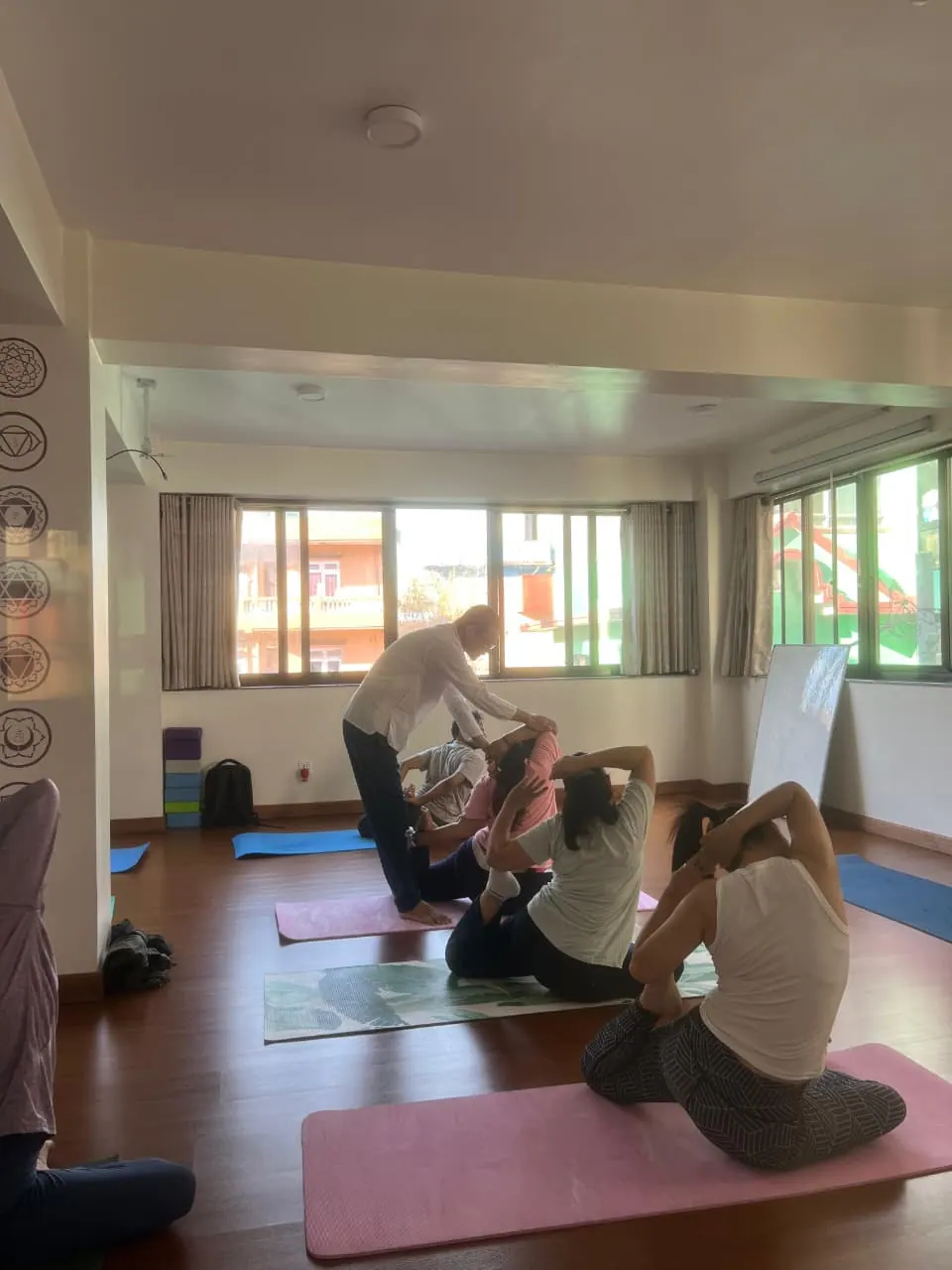
How one-to-one yoga therapy differs from a class, what it can help with, when to see a doctor first, and what happens in your first session in Kathmandu.
Most people who ask us about yoga therapy have a specific reason. A lower back that has ached for months. A neck that locks up after long days at a laptop. Sleep that won't come. A knee that never quite recovered. They have heard that yoga might help, but a busy group class feels like the wrong place to find out.
That instinct is right. Yoga therapy is not a gentler yoga class. It is a different way of using yoga: one person, one set of needs, and a practice built specifically for them. This guide explains what yoga therapy is, what it can and cannot help with, what happens in a session, and how to tell whether it is right for you.
What is yoga therapy?
Yoga therapy, sometimes called yogic therapy or by its Sanskrit name yoga chikitsa, applies the tools of yoga to a particular health concern. Those tools are familiar ones: posture, movement, breathing, relaxation and attention. What changes is how they are chosen.
In a group class, the teacher plans one sequence and everyone follows it, with variations. In therapy, the sequence starts from you. Which postures you do, how long you hold them, which you leave out entirely, how you breathe and how you rest are all decided by your body, your history and your goal.
It is a complementary practice. It works alongside medical care, not instead of it.
Yoga therapy vs a regular yoga class
- Who it's built for: a class is built for a group; therapy is built for one person.
- Starting point: a class starts from a style or theme; therapy starts from an assessment of you.
- What's avoided: in a class you modify as you go; in therapy, anything that aggravates your condition is designed out from the start.
- Pace of change: a class changes week to week for the group; a therapy plan changes as your body responds.
- Homework: a class rarely sets any; therapy almost always gives you a short daily routine.
Both are valuable. Many people begin with therapy, then move into group classes once they understand their body and trust their practice.
What can yoga therapy help with?
People most often come to us for:
- Back, neck and shoulder pain, especially the persistent, posture-related kind that builds up from desk work, driving or carrying children.
- Stiffness and reduced mobility in the hips, spine and shoulders.
- Stress and anxiety, where slow breathing and deep relaxation help settle a nervous system that never switches off.
- Poor sleep, often linked to the same restlessness.
- Breathing difficulties, where gentle, carefully chosen pranayama can help people breathe with less effort. This always goes alongside, never instead of, medical treatment.
- Recovery after injury, once a doctor or physiotherapist has cleared you to move.
- Gentle practice in later life, when balance, joint health and confidence matter more than flexibility.
Of these, persistent low back pain has some of the strongest research behind it. The American College of Physicians' 2017 guideline, for example, lists yoga among the recommended non-drug options for chronic low back pain. For many other conditions the evidence is still developing, so we are careful about what we promise.
If desk-related pain is your main concern, our article on desk yoga for back, neck and shoulder pain has simple movements you can try today.
When yoga therapy is not the right first step
Some symptoms need a doctor before they need a yoga teacher. Please see a medical professional first if you have:
- Pain after a fall or accident, or pain that is getting rapidly worse.
- Numbness, tingling or weakness in the arms or legs.
- Chest pain, unexplained breathlessness or dizziness.
- Pain with fever, unexplained weight loss or night sweats.
- A recent operation, unless your surgeon has approved exercise.
None of this rules out yoga later. It means getting a diagnosis first, so that any practice is built on the right information. Tell your yoga therapist what your doctor said; it makes the plan safer.
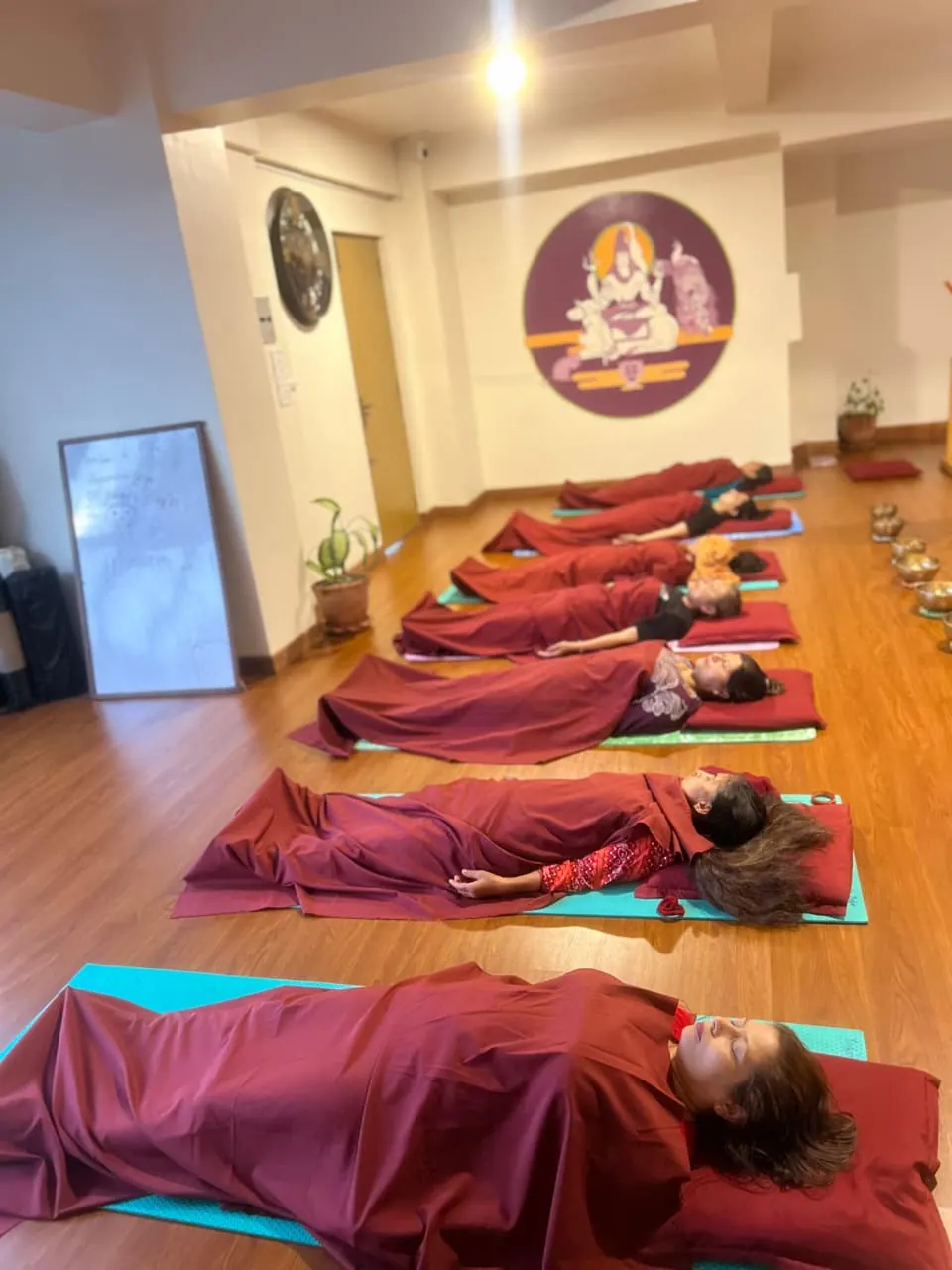
What happens in a yoga therapy session
### The first session: assessment
The first meeting is mostly conversation and observation. Expect questions about:
- What brought you here, when it started and what makes it better or worse.
- Your medical history, current treatment and any medication.
- Your daily routine: work, sitting, sleep, exercise, stress.
- What you want to be able to do that you can't do now.
Then your therapist will watch how you move and breathe: how you stand, bend, turn and sit, and where movement stops or hurts. Nothing should be forced. The aim is to understand, not to test your limits.
### Your plan
From the assessment, your therapist designs a short practice for you. It usually combines a few carefully chosen movements, a breathing technique and a relaxation method. It is often simpler than people expect. A good therapeutic practice is one you will actually do.
### Follow-up sessions
Each later session starts with how the practice went. What felt better? What was difficult? What changed? The plan is adjusted: some movements progress, some are dropped, new ones are added. Over time, you take more of it into your own hands.
### Practice at home
The work between sessions matters as much as the sessions themselves. Most people leave with a routine of 10 to 20 minutes for daily practice. That is where much of the change happens.
How many sessions will I need?
It depends on the person and the problem, and anyone who gives you a fixed number before meeting you is guessing. As a rough guide, many people find a short series of sessions, spaced a week or so apart, is enough to learn a routine and feel a difference. Longer-standing conditions may need longer. After the first assessment, we will give you an honest picture.
Choosing a yoga therapist
Whoever you see, ask:
1. What training and experience do you have in therapeutic work, beyond teaching group classes? 2. Will you assess me before we start practising? 3. Will the session be one-to-one? 4. Are you comfortable working alongside my doctor or physiotherapist? 5. What will I practise at home?
Be cautious of anyone who promises a cure, tells you to stop prescribed treatment, or pushes you through pain.
Yoga therapy at Yogmandu
Our yoga therapy sessions are one-to-one, held in a quiet room at our studio in Mid-Baneshwor, Kathmandu, and guided by our senior faculty. Every programme begins with an assessment and includes a routine you can continue at home. Wear comfortable clothes; mats and props are provided.
Because each programme is individual, we quote after a short conversation about your needs. Message us on WhatsApp at +977-9810263277 or email yogmandu@gmail.com, and tell us briefly what you are dealing with. We will tell you honestly whether we think we can help.
You can read more on our yoga therapy page. If rest and recovery are part of your goal, our guide to yoga nidra is a good place to start, and pranayama for beginners explains the breathing practices we use most often.