
What Level I and Level II Tibetan singing bowl training involve, who each suits, and the real responsibilities of sound healing practice.
A sound healing session can feel simple from the receiving end. You arrive, settle into a comfortable position, listen to the bowls and leave with your own impression of the experience. Learning to offer a session is different.
A practitioner needs more than the ability to make a bowl sing. They need to listen carefully, work with appropriate volume and pacing, communicate clearly, respect personal boundaries and understand the limits of their role.
At Yogmandu in Mid-Baneshwor, Kathmandu, Tibetan singing bowl training is offered through Level I and Level II certification. These courses are for people who want to learn the practice properly, whether they are complete beginners, yoga teachers, therapists or people drawn to sound work after attending a session themselves.
Receiving a session and giving one
Receiving sound healing is a personal experience. Some people find the sounds calming or absorbing. Some notice physical sensations from the resonance. Others simply appreciate having uninterrupted time to rest. Our earlier post on what a sound healing session feels like describes that side of it in detail.
Giving a session requires another kind of attention. The practitioner has responsibility for the setting, the client's comfort, the intensity of the sound, the sequence of the session and the way concerns are handled.
That means learning to practise sound healing is not only about instruments or technique. It is also about developing steadiness and judgement.
A practitioner needs to consider:
- The person receiving the session — their comfort, preferences, relevant health information and response during the session.
- The environment — privacy, room temperature, noise, safe positioning and a calm beginning and ending.
- The instruments — their size, tone, placement and the volume produced.
- The sequence — when to begin, when to pause and when a shorter or gentler approach is more appropriate.
- Professional boundaries — what the practitioner can offer and when another qualified professional is the right person to contact.
A training course provides space to develop these skills with guidance and supervised practice rather than trying to learn solely from online videos or personal experimentation.
What Level I training covers
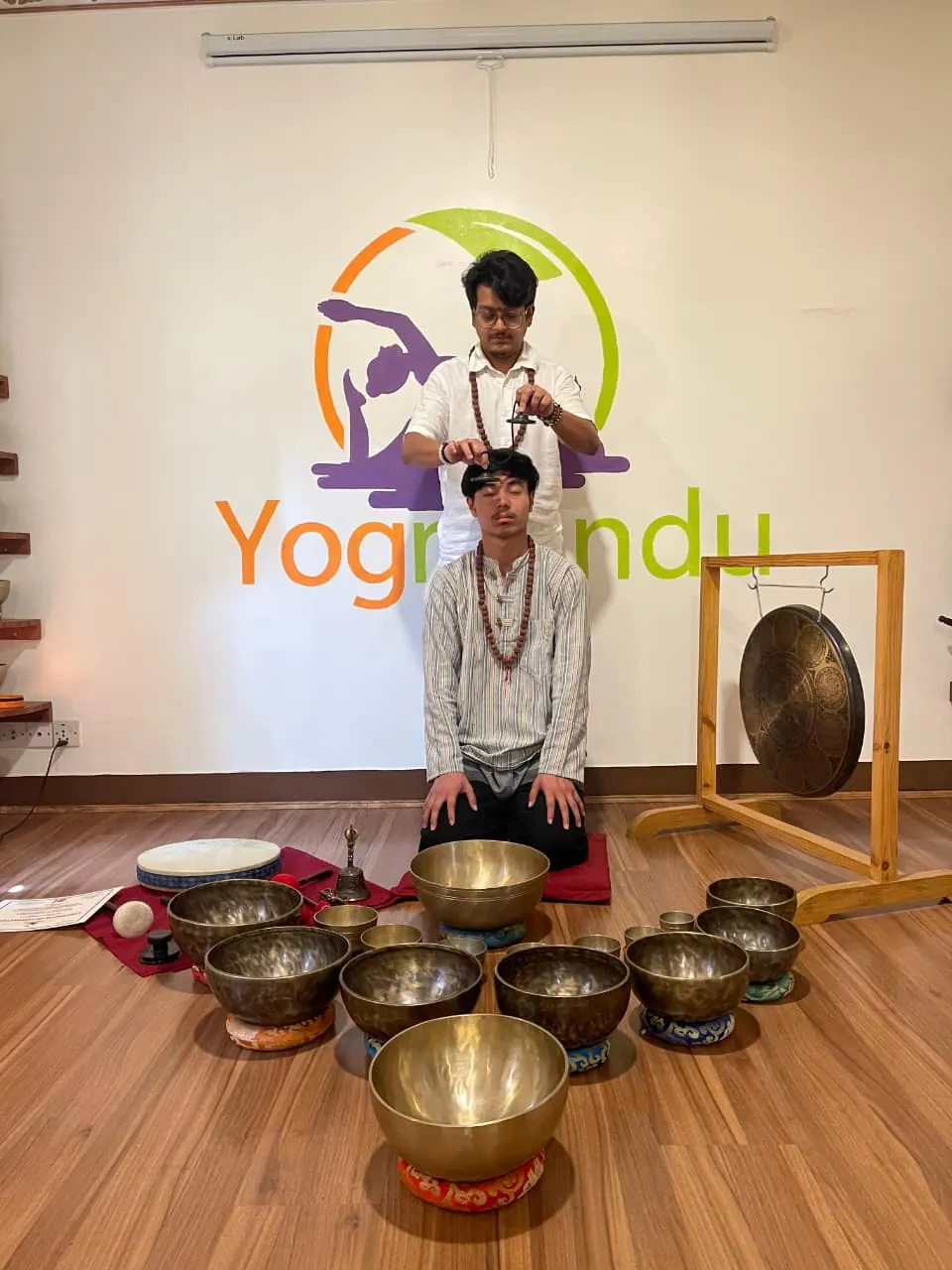
Level I certification is the foundation for people who want to understand Tibetan singing bowls and begin learning how to work with them responsibly.
The starting point is the bowls themselves. Participants learn about the instruments, their different sounds and the practical ways they can be played. This includes striking technique, rim technique and listening closely to the response of each bowl.
The course also explores how sound is experienced in a quiet session. That means learning not to rush from one bowl to another, not to play louder simply to create an effect and not to treat a fixed sequence as more important than the person in front of you.
Level I commonly focuses on:
- Recognising the different qualities and sounds of singing bowls.
- Producing sound with controlled striking and rim technique.
- Listening for tone, volume, sustain and changes in the room.
- Creating a simple, coherent session structure.
- Preparing a calm and respectful setting.
- Beginning and ending a session clearly.
- Learning to hold space without making promises or claims.
- Practising with another person and receiving feedback.
A foundational course does not turn someone into a medical practitioner or mental-health professional. It provides a structured beginning for those who want to understand the practice and develop basic competence with care.
What Level II adds
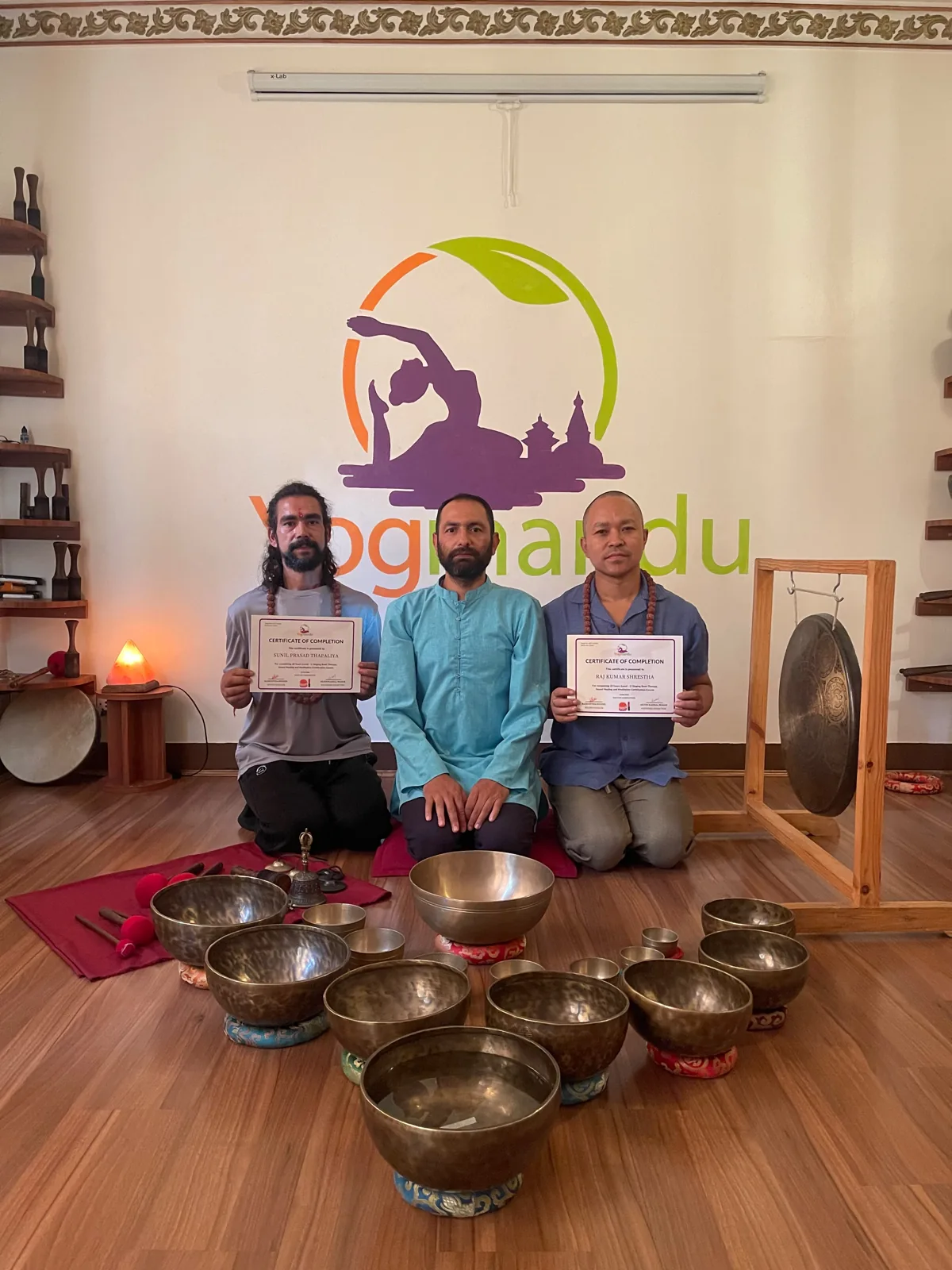
Level II certification is for people who have completed the foundation and are ready to build more confidence, range and independence.
At this stage, the focus moves beyond basic bowl technique. Participants can spend more time considering how sessions are planned, how sound can be arranged for different settings and how to work thoughtfully with more than one person.
Level II may include work with group sessions, more complex sequencing and more sustained practical experience. A group sound session has its own challenges: people are positioned differently in the room, individuals may respond differently to volume and intensity, and the practitioner needs to maintain a stable atmosphere without assuming that everyone is having the same experience.
Level II also places more emphasis on client care. This includes clear communication before a session, sensible screening questions, consent, boundaries and knowing when the practitioner's role has reached its limit.
The aim is not to create dependence on the practitioner. It is to help someone lead a well-prepared session with confidence, humility and respect.
Who each level suits
Level I can suit:
- Someone who has attended a sound healing session and wants to learn more.
- A yoga teacher who wants to explore sound as an additional relaxation practice.
- A wellness practitioner who wants a careful introduction to Tibetan singing bowls.
- A person with no yoga background who is willing to practise, listen and learn responsibly.
- Someone considering future Level II training but wanting a proper foundation first.
Level II can suit:
- A person who has completed Level I and practised the foundations.
- A practitioner who wants more structured experience in leading sessions.
- A yoga teacher or wellness practitioner who wants to use sound more confidently in appropriate settings.
- Someone ready to think more deeply about client care, groups and professional limits.
Some people should wait before moving into Level II. If you are still uncertain about basic bowl technique, have not had time to practise after Level I or feel unclear about boundaries and responsibility, more foundation work is usually more valuable than rushing ahead.
Sound healing is not a race through certificates. Careful practice, honest self-assessment and continued learning matter more than collecting levels quickly.
Responsibility comes before performance
A singing bowl practitioner should not see themselves as someone who "fixes" people. The role is to offer a respectful sound-based relaxation or meditative experience, not to diagnose illness, promise recovery or claim control over another person's health.
This distinction matters. Someone may arrive feeling stressed, exhausted, in pain or emotionally overwhelmed. They may value the quiet and attention of a session, but those experiences do not make sound healing a substitute for medical, psychological or emergency care.
A responsible practitioner knows when to pause, when to adapt and when to refer someone elsewhere. If a person describes symptoms that need medical assessment, serious distress or a mental-health crisis, the appropriate response is not to make a bigger therapeutic claim. It is to encourage suitable professional support.
Training should also include respectful communication. Do not tell a client that a sound, chakra or bodily sensation proves they have a particular condition. Do not advise someone to stop prescribed treatment. Do not present personal belief as medical fact.
### What certification does not qualify you to do
Sound healing certification is not a medical qualification. It is not a psychotherapy qualification, counselling licence, physiotherapy credential or nutrition qualification.
A sound healing practitioner must not:
- Diagnose a physical or mental-health condition.
- Claim to treat, cure or prevent disease.
- Tell a client to stop medication or delay medical care.
- Promise a particular physical, emotional or spiritual outcome.
- Present singing bowls as a replacement for a doctor, therapist or other qualified clinician.
- Work beyond their competence when a person needs specialist support.
This does not make the practice meaningless. It simply keeps it honest. Some people enjoy sound healing as a relaxation practice, a reflective pause or part of a personal wellbeing routine. The practitioner's responsibility is to describe the work accurately and avoid overstating what it can do.
What does the evidence say?
Research on singing bowls is interesting, but it remains limited. Some studies have reported possible benefits related to relaxation, mood, anxiety or sleep. However, the evidence is not strong enough to treat singing bowl therapy as an established medical treatment.
A 2025 systematic review of clinical studies examined 19 trials and noted that the evidence was affected by small studies, varied methods and a high risk of bias in the randomised trials reviewed. An earlier systematic review of the human health effects of singing bowls found only four peer-reviewed studies meeting its criteria, which is a very thin base from which to draw conclusions.
Cedars-Sinai's overview of sound therapy puts it plainly: sound therapy is rooted more in personal experience than in strong scientific evidence, with studies that are few, small and mixed in their results.
The honest position is that singing bowls may be personally meaningful as a relaxation or meditation practice, while broader clinical claims remain uncertain.
Training should make practitioners more careful with language, not more confident in claims that research has not established.
Practical questions before training
Training takes place in Kathmandu at Yogmandu's Mid-Baneshwor school. It combines learning, demonstration, listening and practical work with the instruments and with fellow participants.
You do not need to be an experienced yoga practitioner before joining Level I. Curiosity, patience and willingness to practise are more important than yoga experience. People come to sound healing training from different backgrounds, including yoga, wellness work, teaching and personal interest.
You also do not necessarily need to own a complete set of bowls before beginning. Training gives you an opportunity to learn about the instruments and develop technique before deciding what you may want to buy for your own practice. Ask the school about current course arrangements and what is available for participants to use during training.
How we approach this at Yogmandu
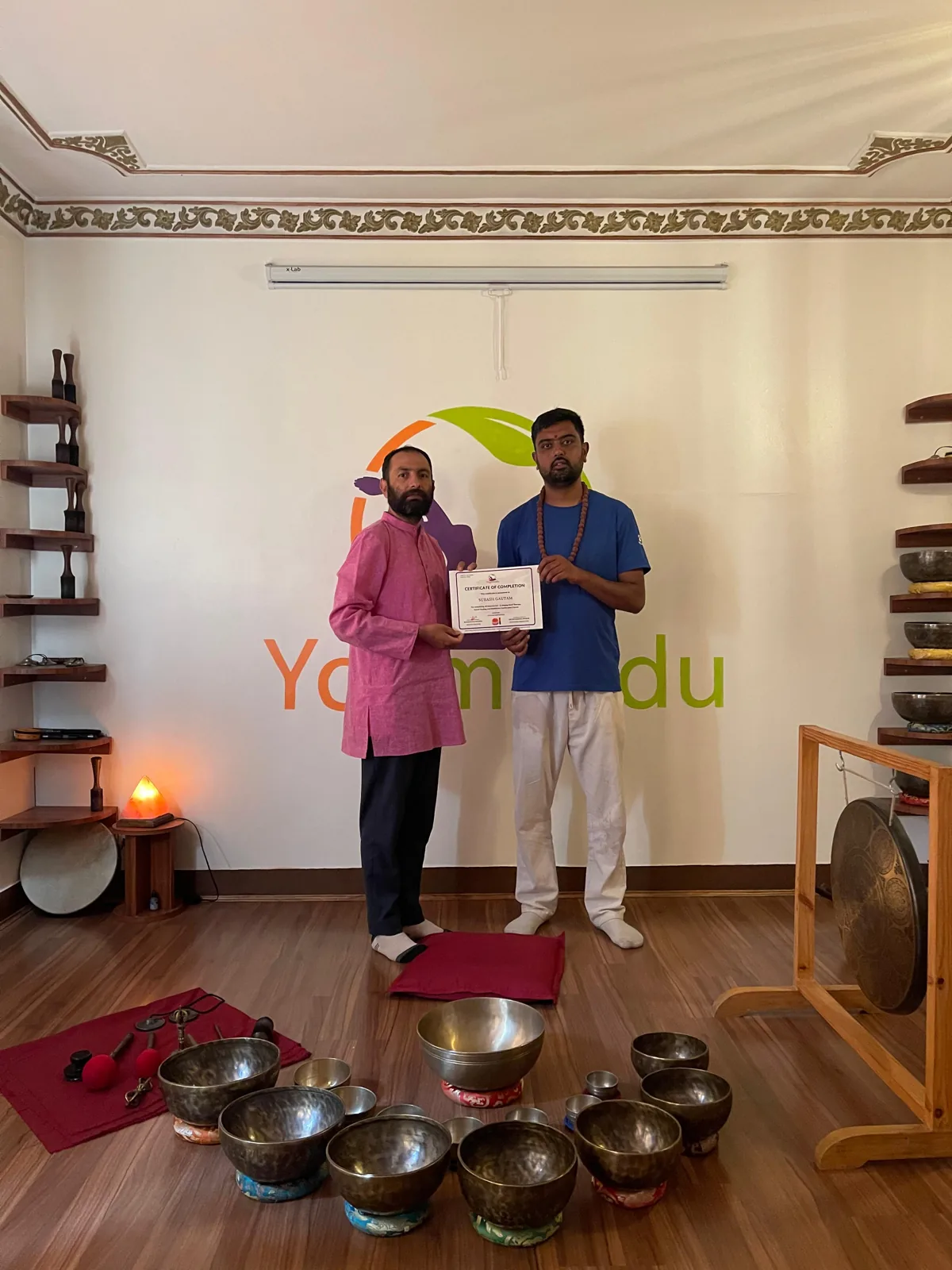
At Yogmandu, sound healing training is approached as a practice requiring attention, skill and responsibility. We teach participants to work with Tibetan singing bowls carefully, to listen rather than force an effect and to build sessions with a clear beginning, middle and end.
Level I focuses on a solid foundation: instrument knowledge, playing methods, simple session structure and respectful one-to-one practice. Level II builds on that grounding with more independent practice, group work, sequencing and deeper attention to client care.
We also emphasise limits. A sound healing practitioner is not a doctor or mental-health professional, and training does not authorise diagnosis or treatment claims. We encourage practitioners to communicate honestly, stay within their competence and refer clients to appropriate support when needed.
If you would like to experience a session before considering training, our sound healing sessions are the natural starting point.
Frequently asked questions
### Do I need yoga experience to take Level I sound healing training?
No. Prior yoga experience is not required for Level I. The course can suit beginners as well as yoga teachers and wellness practitioners. What matters is a genuine interest in learning the instruments and practising responsibly.
### Do I need my own Tibetan singing bowls?
Not necessarily before training begins. Training is an opportunity to learn about different bowls and techniques before deciding what instruments you may want for personal or professional use. Check current course details with Yogmandu before enrolling.
### What is the difference between Level I and Level II?
Level I teaches the foundations: understanding bowls, basic striking and rim technique, listening, simple session structure and respectful one-to-one practice. Level II is for those with a foundation who want more practice with groups, sequencing, client care and independent session planning.
### Can I offer sound healing professionally after certification?
Certification can provide training in sound healing practice, but it does not make someone a medical or mental-health professional. A practitioner must not diagnose, treat conditions, make cure claims or advise clients to replace medical care.
### Is sound healing scientifically proven?
No. Some research suggests singing bowl sessions may have potential benefits for relaxation, mood or sleep, but the studies are limited and often have methodological weaknesses. Singing bowls should be described as a complementary relaxation or meditative practice, not as a proven medical treatment.
---
Sources
- Therapeutic effects of singing bowls: a systematic review of clinical studies — *Integrative Medicine Research*, 2025
- The human health effects of singing bowls: a systematic review — Stanhope & Weinstein, *Complementary Therapies in Medicine*, 2020
- Sound advice: do sound therapy and binaural beats work? — Cedars-Sinai