Desk Yoga for Back, Neck and Shoulder Pain
Gentle desk yoga can ease everyday back, neck and shoulder tension. Learn safe movements, warning signs and when to seek one-to-one support.
A long day at a desk can leave you with a familiar collection of aches: a tight neck, shoulders that seem to live near your ears, a stiff upper back, sore hips, or a low back that complains when you stand up.
Yoga can sometimes help with everyday desk-related tension, but it is not a cure for every kind of pain. Back, neck and shoulder pain have many possible causes. Persistent, severe, worsening, or unexplained pain needs assessment from a doctor or physiotherapist, not simply another stretch or yoga class.
For chronic non-specific low back pain, a 2022 Cochrane review found that yoga may bring small improvements in pain and back-related function compared with doing no exercise. The review also found that the improvements were modest, and yoga was not clearly better than other back-focused exercise. Some participants experienced temporary increases in back pain, so careful, adapted practice matters.
The useful question is not, "Can yoga fix my back?" It is, "Can thoughtful movement, breathing and better daily habits help me feel and function more comfortably?"
For many desk workers, the answer may be yes.
When pain needs medical advice
Before trying any movement routine, take your symptoms seriously.
Seek urgent medical advice if you have back or neck pain with numbness or tingling travelling down a leg, new weakness, loss of bladder or bowel control, unexplained weight loss, pain following a fall or accident, or pain that wakes you regularly at night.
Also see a doctor or physiotherapist if pain is severe, steadily worsening, persistent, linked with fever or illness, or preventing you from carrying out ordinary daily activities.
Yoga may be a helpful part of recovery for some people, but it should not delay proper assessment. This is especially important if you have a diagnosed spinal condition, recent surgery, osteoporosis, inflammatory arthritis, a disc problem, or a history of serious injury.
What sitting all day can do
Sitting itself is not a failure. Most office jobs require it, and a chair is not the enemy.
The problem is often staying in one position for too long.
After hours at a desk, the front of the hips may feel tight because the hip flexors have spent much of the day in a shortened position. The glutes are doing less active work than they would while walking, climbing stairs or changing position regularly. The thoracic spine, the middle part of the back around the ribs, may become stiff from leaning forwards over a screen.
At the same time, the head may gradually move forward towards the laptop. This can make the muscles at the back of the neck and upper shoulders work harder to hold it there. Many people then respond by lifting their shoulders, tightening their jaw, or taking shallow breaths high in the chest.
None of this means you are "damaged" by sitting. It means the body is asking for more variety.
Why sitting up straight is not enough
"Sit up straight" is common advice, but it is incomplete.
Trying to hold one supposedly perfect posture all day can become tiring in its own way. A rigid, over-corrected posture may create more tension through the neck, ribs and low back. Bodies are made to move, shift, reach, walk, bend and rest.
A more useful goal is movement variety.
Change your position often. Stand for a phone call. Walk to refill your water bottle. Look away from the screen. Shift your weight in the chair. Take a short movement break before discomfort becomes a full ache.
Good posture is not one fixed shape. It is the ability to move comfortably between many shapes.
A five-minute desk reset
You do not need a yoga mat, changing clothes or a private studio for this. Try the following sequence once or twice during the working day, staying within a comfortable range.
Move slowly. Nothing should cause sharp pain, dizziness, tingling or a spreading sensation down an arm or leg.
1. Sit back in your chair and place both feet on the floor. Take three slower breaths, allowing the exhale to be slightly longer than the inhale. 2. Let your arms rest by your sides. Roll both shoulders gently up, back and down five times. Avoid forcing a large circle. 3. Turn your head slowly to the right, then return to centre. Turn to the left. Repeat three times on each side, keeping the chin level rather than lifting it. 4. Bring your hands behind your head if that is comfortable. Let the elbows open slightly and lift the breastbone gently without pushing the low back forward. Take two breaths. 5. Hold your arms in front of you and interlace your fingers, or simply place one palm against the other. Reach forwards gently and let the upper back broaden. Do not round aggressively. 6. Sit tall enough to feel both sitting bones on the chair. Slowly lift one knee a few centimetres, lower it, then change sides. Repeat several times to wake up the hips without straining them. 7. Stand up. Place your hands on the desk for support, step one foot back, and lengthen through the back leg. Change sides after a few breaths. 8. Walk for one minute before returning to work.
This is not a workout. It is a reminder to your body that the workday includes movement too.
A short evening sequence at home
At the end of the day, you may need less intensity rather than more. The aim is to move after sitting, not to force a deep stretch because you feel stiff.
Try this short sequence at home. Use a folded blanket under your knees if needed. Stop or modify any movement that increases pain.
### Start with gentle walking
Walk around your room or outside for three to five minutes. Let your arms swing naturally and let your breath settle.
### Cat and cow movements
Come onto hands and knees. As you breathe in, gently lengthen the spine and broaden the chest. As you breathe out, gently round through the upper and middle back.
Move slowly for six to eight rounds. The movement should feel smooth, not forced.
### Child's pose variation
Bring the hips back towards the heels only as far as is comfortable. Keep the arms forward, or place a cushion under the chest if that feels better.
If bending the knees deeply is uncomfortable, skip this pose and rest lying on your back instead.
### Low lunge with support
Step one foot forward and keep the back knee on the floor or a folded blanket. Rest your hands on the front thigh and stay upright.
This can provide a gentle opening through the front of the hip. Do not push the pelvis forward sharply. Take three to five relaxed breaths on each side.
### Bridge preparation
Lie on your back with knees bent and feet on the floor. Press gently through both feet and lift the hips only a little, then lower slowly.
Repeat five to eight times. Think of this as waking up the hips and glutes, not creating the highest bridge possible.
### Rest with bent knees
Finish lying on your back with knees bent, feet on the floor, or with the lower legs supported on a chair or sofa. Let the shoulders soften.
Stay for two to five minutes and breathe quietly.
Breathing, stress and pain
Pain is physical, but it is not experienced by muscles and joints alone.
Stress, poor sleep, worry, workload and a constantly switched-on nervous system can all make the body feel more guarded. When you are stressed, you may breathe more shallowly, tighten the jaw, lift the shoulders and brace through the abdomen without noticing.
That does not mean pain is "all in your head". It means the nervous system is part of the experience.
Slow breathing can be a useful place to start. Sit or lie comfortably. Let the inhale arrive naturally, then make the exhale a little longer without straining. You might breathe in gently for a count of four and out for a count of five or six.
If counting makes you tense, do not count. Simply notice the lower ribs and abdomen moving with the breath.
General yoga or yoga therapy?
A general yoga class can be a good choice if your discomfort is mild, familiar, stable, and you are able to move normally through daily life. A skilled teacher can offer options for poses, remind you not to force stretches, and help you build a regular movement habit.
A general class is not the same as personalised therapeutic care.
One-to-one yoga therapy may be more suitable if your pain keeps returning, you are recovering from injury, you have a diagnosed condition, you feel nervous about joining a group class, or you need a programme adapted to your movement, work habits and current symptoms.
Yoga therapy should work alongside appropriate medical or physiotherapy care where needed. It is not a replacement for diagnosis or treatment from a qualified clinician.
You can also explore Yogmandu's wider therapy and wellness offerings if you are looking for a more individual approach to rest, movement and wellbeing.
What to tell your teacher
Tell your teacher before class if you have back, neck or shoulder pain, even if it seems minor.
Be specific. Mention where the pain is, how long you have had it, what movements aggravate it, whether it travels into an arm or leg, and whether you have a diagnosis or advice from a clinician.
You can also say what you are worried about. Perhaps forward bends feel uncomfortable, you cannot comfortably look up, or you are unsure about weight-bearing through the wrists.
A good teacher would rather know before the class starts. It allows them to suggest a simpler version, an alternative pose, or a rest when needed.
You do not need to prove your flexibility or keep up with the person on the next mat.

How we approach this at Yogmandu
At Yogmandu, we treat desk-related pain with care rather than dramatic promises. Yoga may help some people move more comfortably, breathe more freely and become less tense after long hours at a computer, but it is not a substitute for medical assessment when symptoms need one.
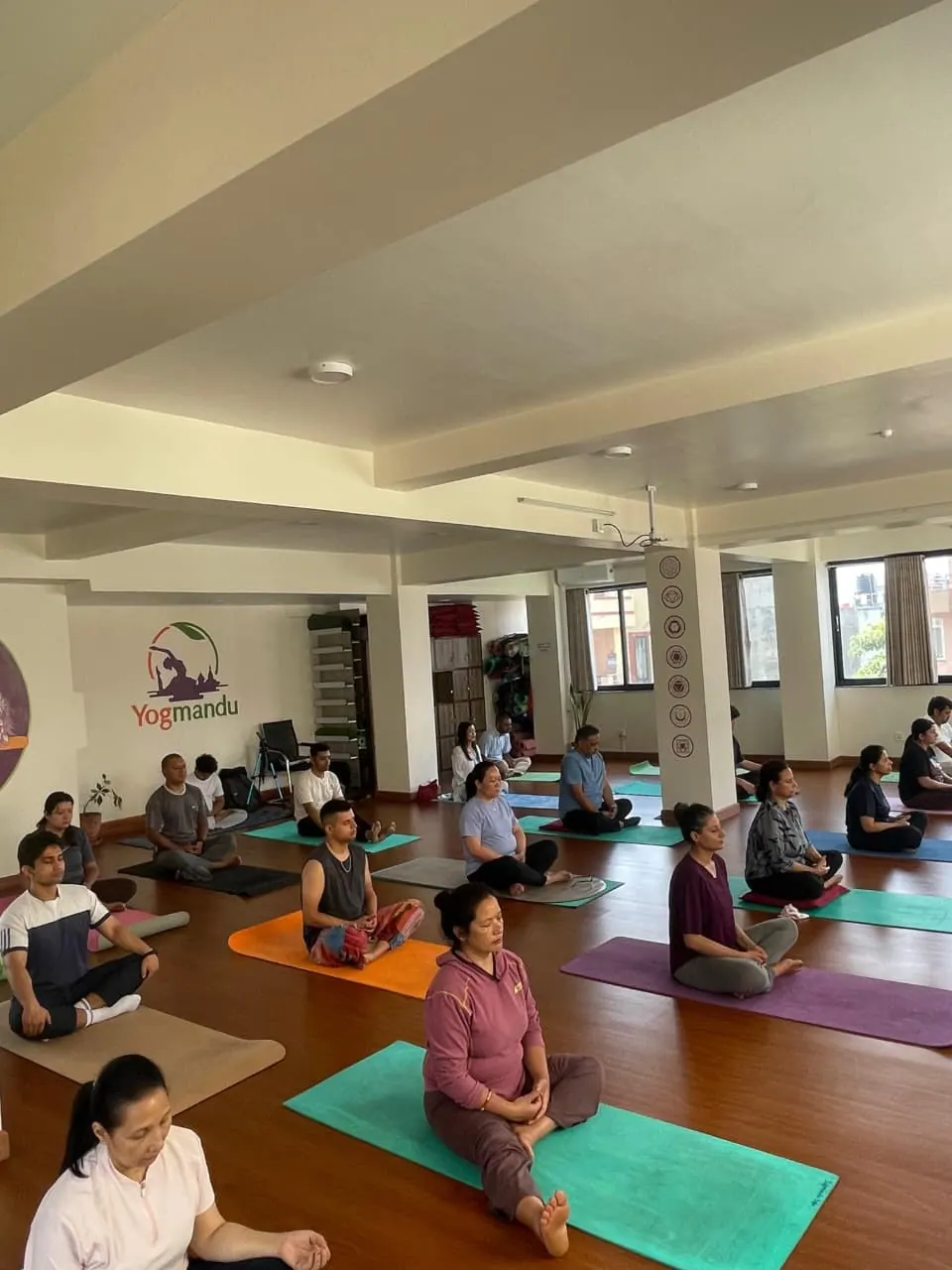
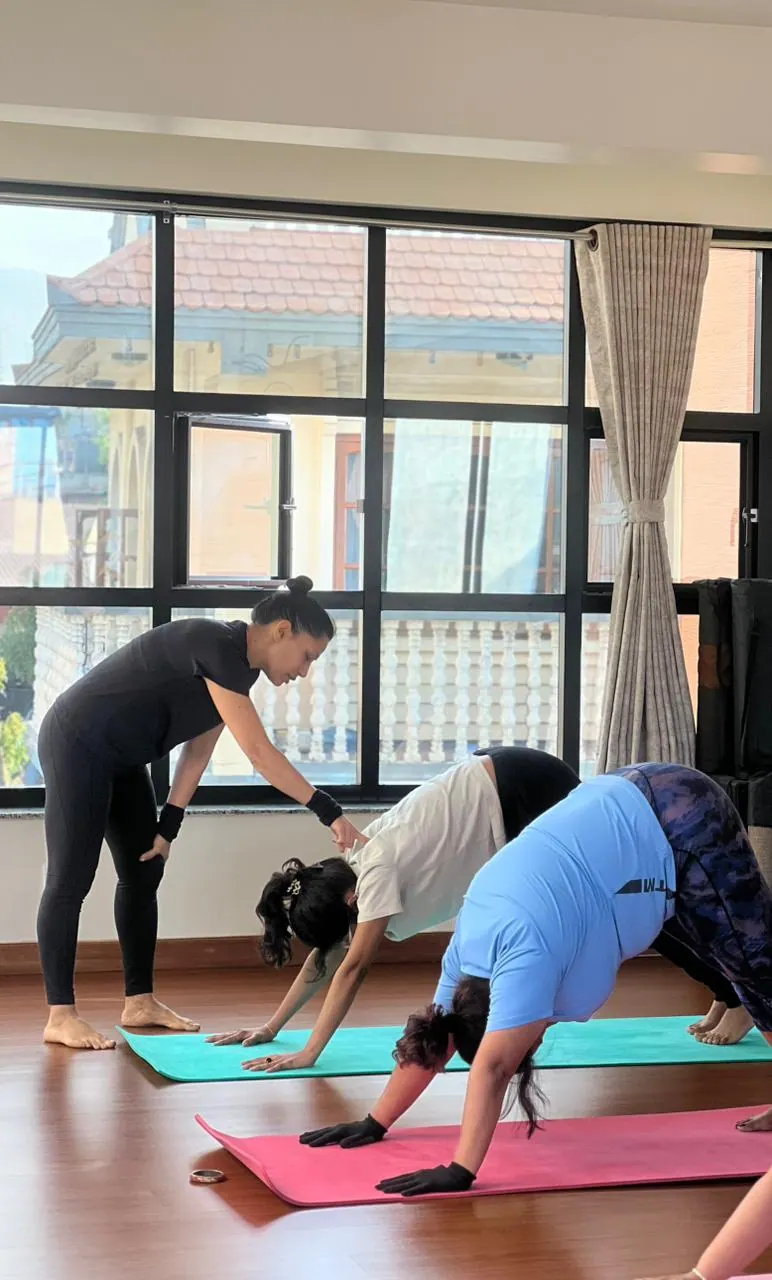
In class, you can tell the teacher about your back, neck or shoulder concern before beginning. The aim is to work within a manageable range, use props or simpler options where appropriate, and avoid treating discomfort as something to push through.
For people who need more individual attention, Yogmandu offers yoga therapy. This can be a more suitable starting point than a general group class when pain is ongoing, recovery is complicated, or you need movements adapted to your particular situation.
For mild, stable desk tension, a regular drop-in class can also be a practical way to bring more movement, breathing and rest into the week.
Frequently asked questions
### Can yoga make back pain worse?
It can if a pose is forced, poorly adapted, or unsuitable for your condition. The Cochrane review of yoga for chronic non-specific low back pain reported temporary increases in back pain for some participants, so move gradually and stop if symptoms worsen.
### Should I stretch my neck if it feels tight?
Gentle movement can feel helpful for ordinary tension, but do not force the neck into deep stretches or sharp turns. If you have pain travelling into your arm, numbness, weakness, dizziness or severe pain, seek clinical advice before practising.
### How often should desk workers take movement breaks?
There is no single perfect schedule. A short break every hour is a useful starting point, but even standing, walking or changing position for a minute or two more often can help interrupt long periods of stillness.
### Is yoga better than physiotherapy for back pain?
Not necessarily. Yoga and physiotherapy serve different purposes, and the best option depends on the cause and severity of your pain. For chronic non-specific low back pain, Cochrane's review suggests yoga may have similar effects on function to other back-focused exercise, rather than being clearly superior.
### Can I come to a drop-in yoga class with shoulder pain?
You may be able to if the pain is mild and stable, but tell the teacher before class and take modifications. If the pain is severe, follows an injury, limits daily movement, or includes weakness or tingling, seek advice from a doctor or physiotherapist first.
---
Sources
- Yoga for chronic non-specific low back pain — Cochrane Database of Systematic Reviews (CD010671)
- Yoga may have health benefits for people with chronic non-specific lower back pain — Cochrane