Tibetan Singing Bowls: What a Session Feels Like
Curious about Tibetan singing bowl sound healing in Kathmandu? Learn what happens in a session, what research suggests and who should take care.
A first sound healing session can feel slightly mysterious before it begins. You may have seen bronze bowls in photographs, heard someone describe a "sound bath", or wondered whether you are meant to believe in something unusual before you walk through the door.
You are not.
At Yogmandu, sound healing is a quiet, guided experience using Tibetan singing bowls. You do not need prior yoga experience, meditation experience, or a particular belief system. You simply need comfortable clothing, a little time, and permission to rest.
This is what a session commonly feels like, where the practice comes from, and what we can honestly say about its possible benefits.
What happens during a session?
Most people arrive carrying more noise than they realise: traffic, phone notifications, travel planning, work pressure, conversation, and the ordinary mental list that continues even when the body sits down.
A sound healing session creates a structured pause from that noise.
### The first few minutes
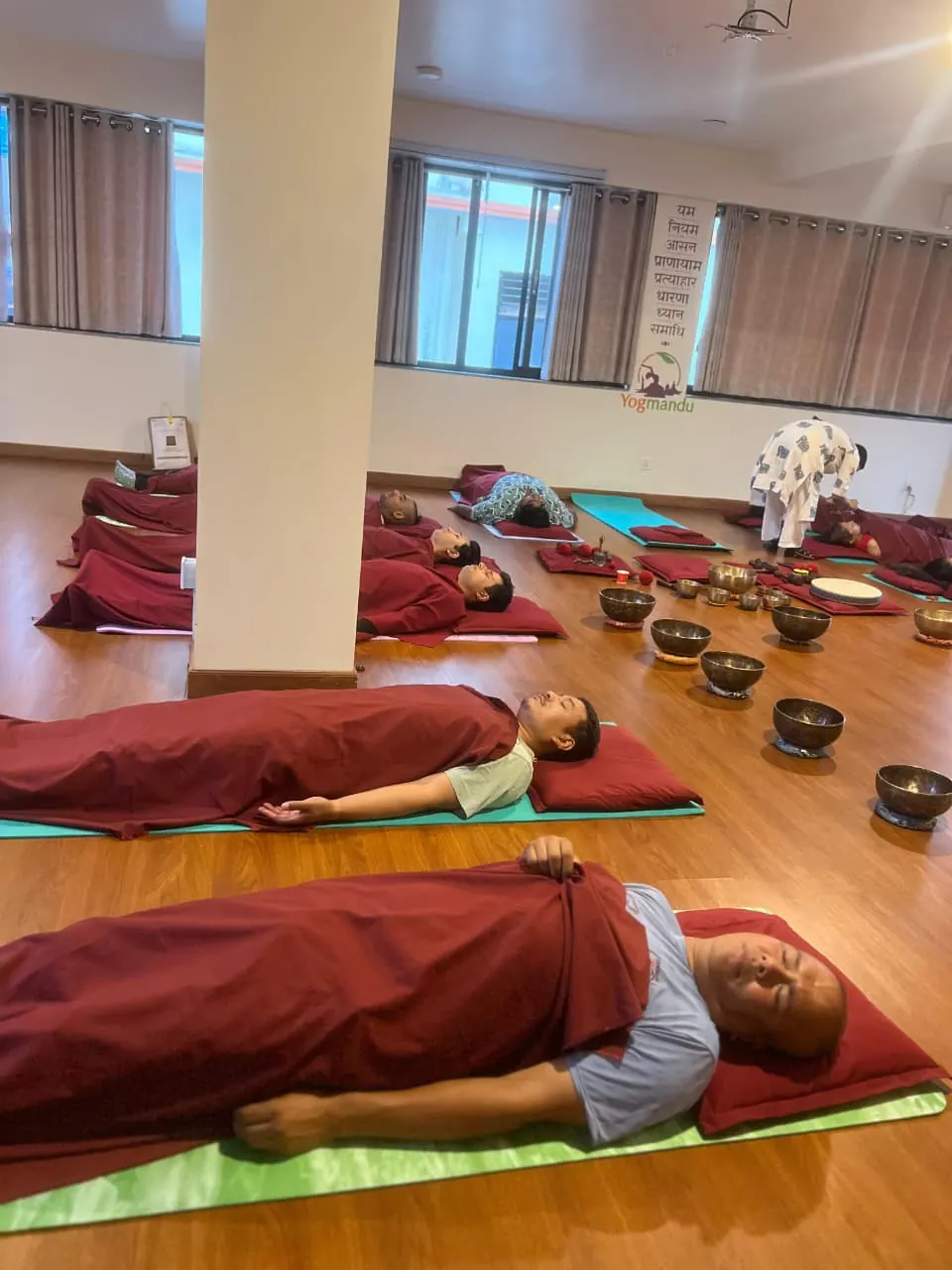
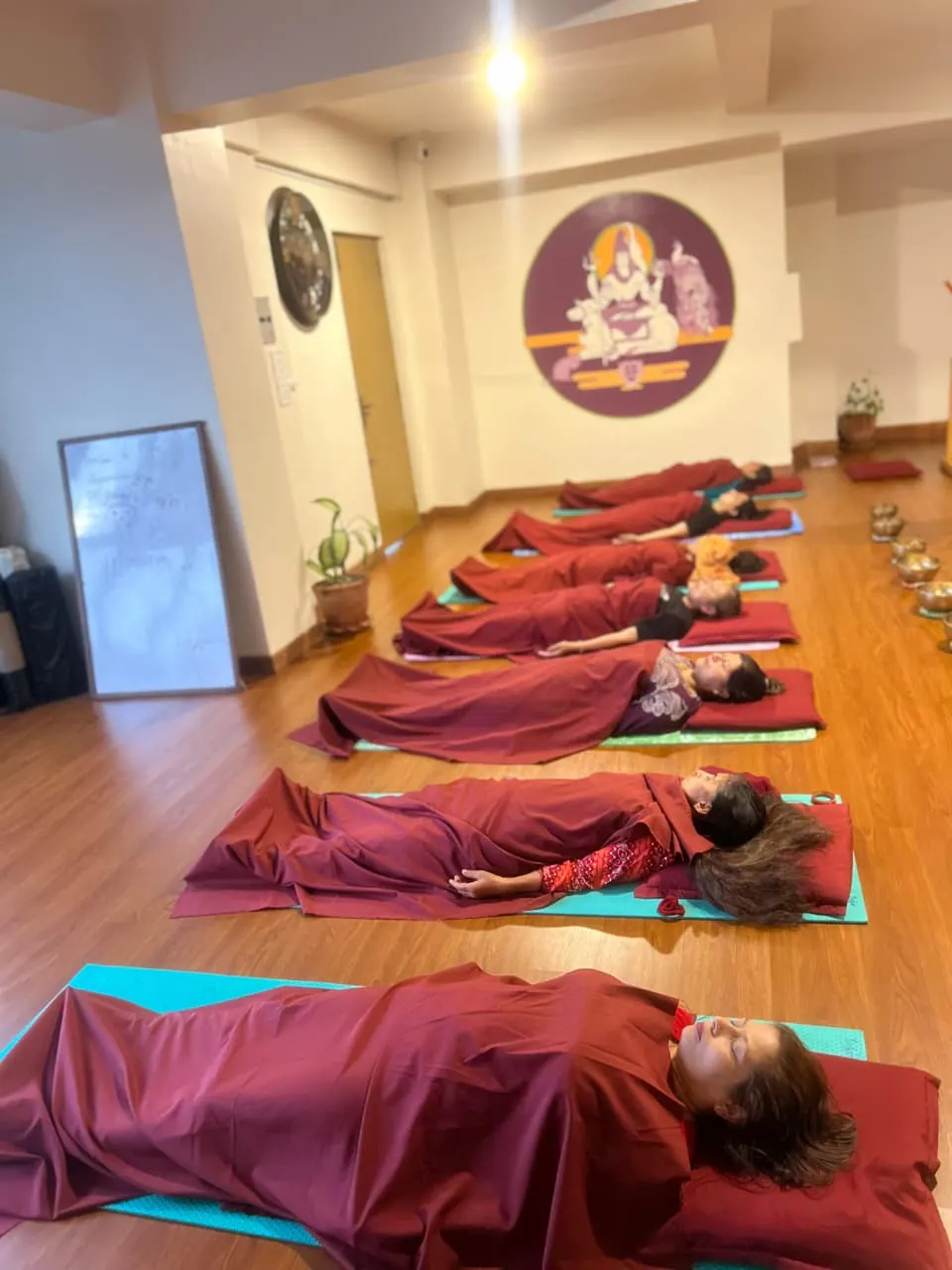
You will usually lie down on a yoga mat, with a blanket or cushion if you need one. Some people prefer to sit, especially if lying flat is uncomfortable. Wear loose, comfortable clothes; you do not need special yoga clothing.
The practitioner may invite you to settle your breath, notice where your body meets the floor, and let your eyes close if that feels comfortable. There is nothing to perform. You do not have to meditate well, empty your mind, or stay perfectly still.
### As the bowls begin
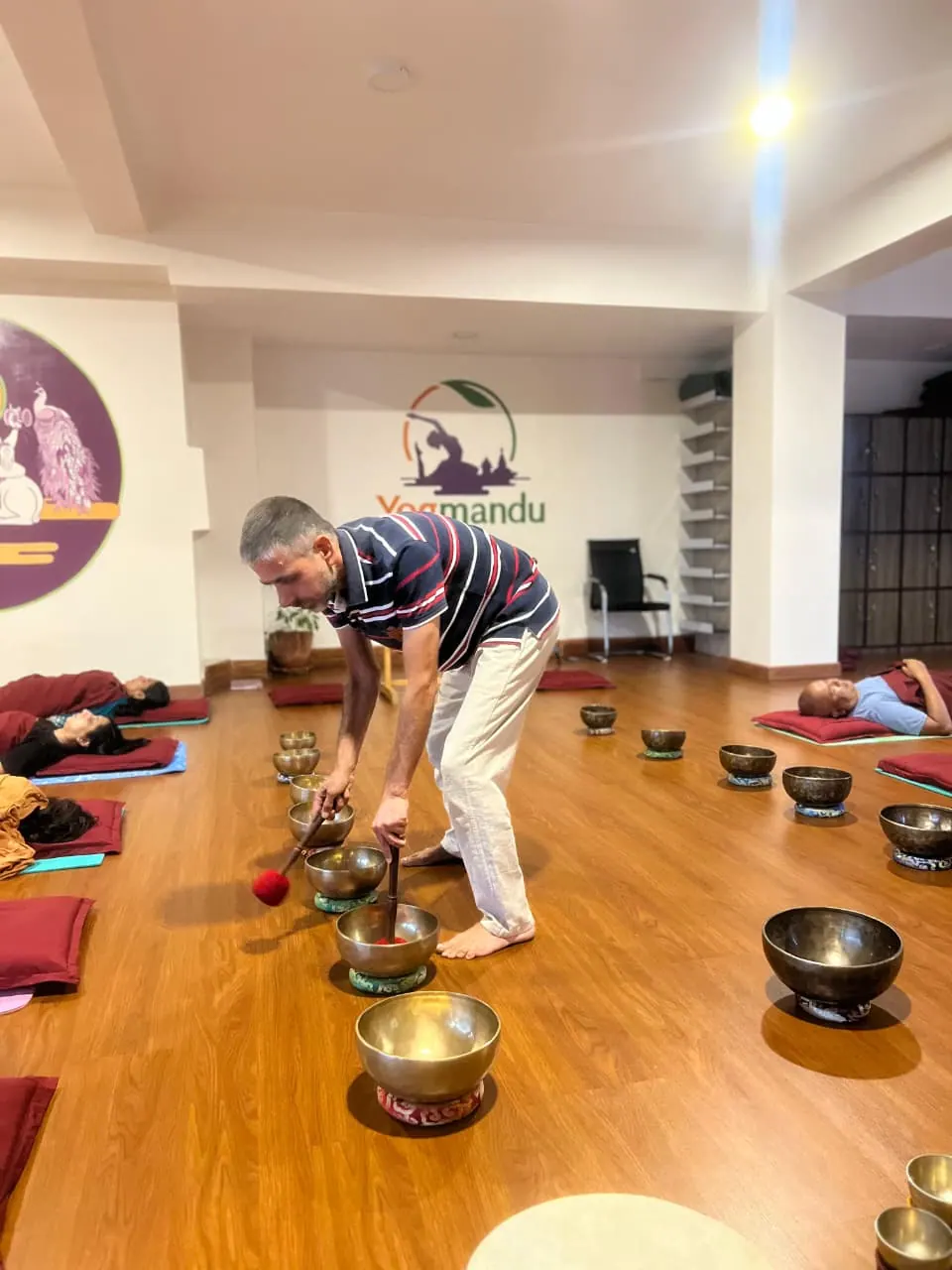
Tibetan singing bowls are struck gently or played around the rim with a mallet. Each bowl produces a fundamental tone alongside several overtones, so the sound can seem to shimmer, pulse, or continue even after the practitioner has stopped moving.
In a group sound bath, bowls are generally placed around the room and played in sequences. You may hear a low, rounded tone from a larger bowl, then a clearer, higher sound from a smaller one. The volume is not intended to be aggressive. Instead, the sounds arrive, fade, overlap, and leave space for silence.
In some one-to-one sessions, a practitioner may place an appropriate bowl on or near parts of the body, such as the back, legs, or hands, and play it gently. This allows you to feel a mild vibration as well as hear the sound. Direct placement should always be discussed first, and it is not necessary for a useful session.
### Twenty minutes in
Many people notice their breathing becoming slower or less effortful. Some feel warmth, heaviness in the limbs, tingling, or a sense of spaciousness. Others become aware of thoughts that had been running in the background.
You may also fall asleep. This is common and not a failure. A session can still be restful even if you drift in and out of sleep.
A 2023 randomised controlled trial involving adults with elevated anxiety found that a single Tibetan singing-bowl session was associated with lower self-reported anxiety and changes in measures linked with relaxation when compared with a waiting-list group. It was a small study, however, so it is better understood as encouraging evidence rather than a final answer.
### The final minutes
The practitioner gradually allows more silence between sounds. You may be invited to notice your breath again, move your fingers and toes, stretch slowly, and sit up when ready.
Do not rush immediately back to your phone. A glass of water, a short walk, or a few quiet minutes can make the transition gentler.
Where do Tibetan singing bowls come from?
Singing bowls are closely associated with Himalayan and Tibetan Buddhist cultural settings, and they are widely used today in Nepal and around the world for meditation, ritual, relaxation, and wellbeing practices.
Their exact history is more complicated than many wellness websites suggest.
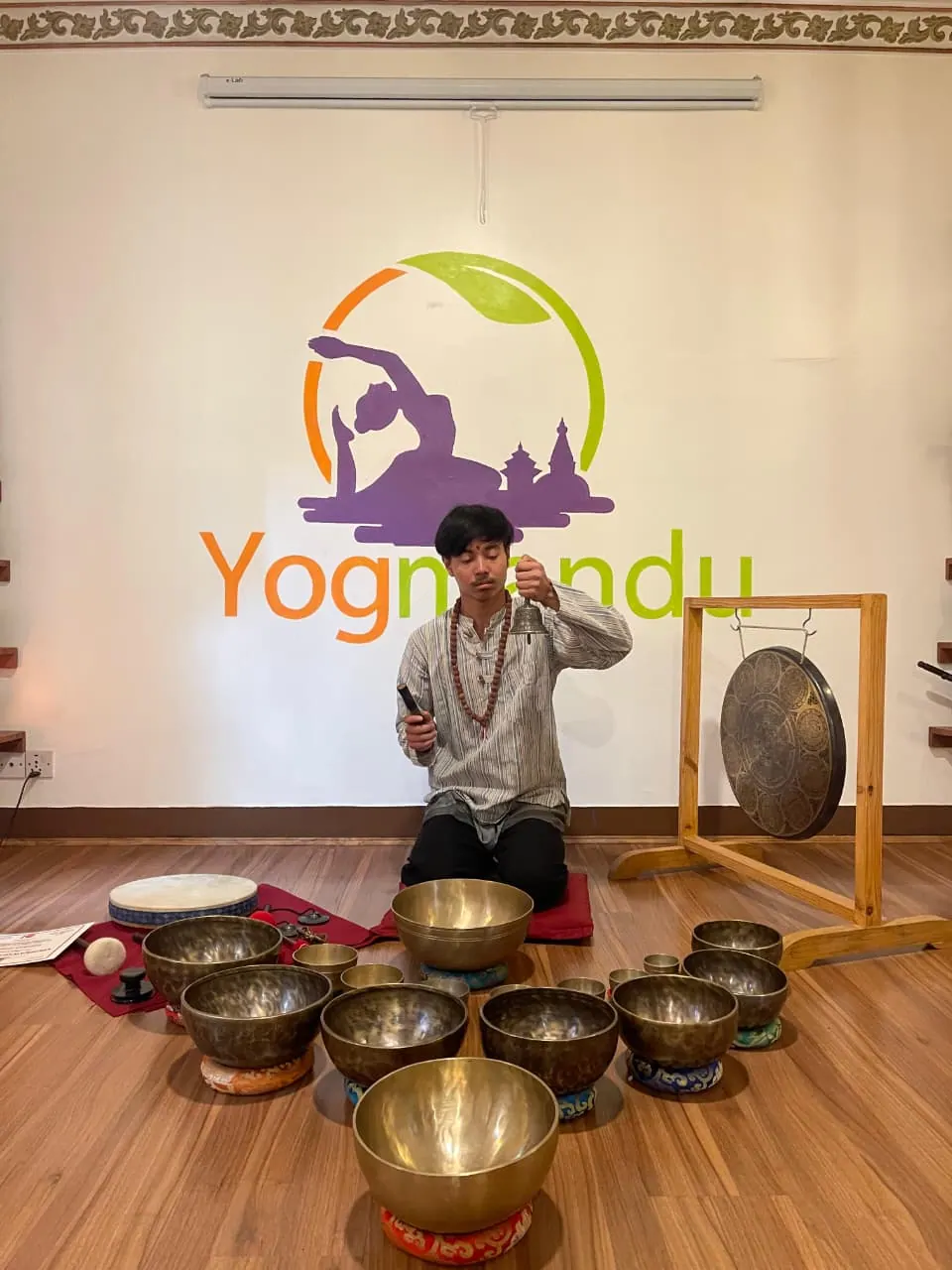
You may hear claims that every singing bowl practice is thousands of years old or that all bowls were originally used in ancient monasteries. The historical record does not support such certainty. Bowls, metalworking traditions, Buddhist ritual objects, and Himalayan sound practices have long histories, but the modern form of "sound healing" and the global sound-bath format have developed through many cultural and contemporary influences.
That does not make the experience inauthentic. It means we can appreciate the Himalayan context without inventing a simple origin story.
At Yogmandu in Mid-Baneshwor, Kathmandu, the setting matters. Nepal is a living Himalayan culture, not merely a backdrop for a wellness trend. A respectful session should honour the practice, the instrument, and the person receiving it.
What research suggests — and what it does not
Sound healing is often described with large promises: balancing every system, curing illness, removing trauma, or repairing the body through frequency alone. These claims go further than the evidence allows.
Research on singing bowls is growing, but it is still limited.
A 2025 systematic review in *Integrative Medicine Research* identified 19 clinical studies on singing-bowl interventions, published between 2008 and 2024 across eight countries. It found possible benefits for anxiety, mood, relaxation, and some sleep-related outcomes, but it also noted substantial differences between the studies and a high risk of bias in the randomised trials reviewed. In plain language: some results are encouraging, but we need better and larger studies before making strong medical claims.
What is reasonable to say?
- A calm, supported sound session may help some people shift into a more relaxed state.
- Some practitioners report reduced tension, easier breathing, less mental restlessness, or a greater sense of calm afterwards.
- The experience may support rest alongside established care for stress, anxiety, pain, or sleep difficulties.
- It is not a substitute for medical treatment, mental-health care, medication, or professional diagnosis.
The nervous system responds to many things: sound, attention, safety, expectation, breathing, quiet, touch, and the simple chance to lie down without interruption. A sound session may work through several of these pathways at once. You do not need to prove exactly why you feel calmer for the rest to be valuable.
Who may enjoy sound healing?
Sound healing can suit people who want a quieter form of relaxation than a movement-based yoga class. It may be especially appealing if you are travelling, feeling mentally busy, recovering from a demanding week, or simply curious about the bowls you see across Kathmandu.
It can also work well for people who find silent meditation difficult. The sound gives the attention somewhere gentle to rest.
### Please check first if you have a health concern
Tell the practitioner before the session if you are pregnant, have epilepsy, have recently had surgery, use a pacemaker or other implanted medical device, or have a condition that makes sound or vibration difficult to tolerate.
In these situations, speak with your doctor or relevant clinician first. A practitioner may suggest listening from a distance, avoiding bowls placed on the body, choosing a gentler session, or postponing the experience. This is a precaution, not a diagnosis.
If you are receiving treatment for trauma, severe anxiety, depression, or another mental-health condition, sound healing may be a supportive addition for some people, but it should not replace your existing clinical care.
What might you feel afterwards?
Many people feel calm, sleepy, lighter, or unusually quiet after a session. Some feel refreshed; others want a slow afternoon and an early night.
Occasionally, an emotional response can arise. A person may feel tearful, thoughtful, or more aware of something they have been carrying. This does not happen to everyone, and it does not mean anything has gone wrong. Rest can make room for feelings that daily busyness keeps at a distance.
Afterwards, give yourself simple care:
- Drink water if you would like to.
- Eat something light if you are hungry.
- Avoid scheduling an intense commitment immediately afterwards where possible.
- Write a few notes if something meaningful surfaced.
- Contact an appropriate health professional if a strong emotional response continues or worries you.
---
A quiet place to begin
You do not need to decide whether sound healing is "real" in the grandest sense before trying it. A more useful question is smaller: do you feel able to give yourself an hour of attentive rest and notice what happens?
For some, the answer is a deep nap. For others, it is a calmer body, a quieter mind, or simply a memorable experience in Kathmandu.
Explore Yogmandu's sound healing sessions or learn how to study the practice through the Level I certification.
Frequently asked questions
### Do I need to believe in chakras or energy healing?
No. You can attend simply because you are curious about sound, relaxation, and rest. Some people connect the experience with spiritual ideas, while others approach it as a quiet sensory practice.
### What should I wear to a sound healing session?
Wear loose, comfortable clothing that allows you to lie down or sit easily. You do not need yoga clothes, special equipment, or previous experience.
### Will I fall asleep?
You might, and many people do. Falling asleep is a common response to feeling safe and relaxed; it does not mean you have missed the whole experience.
### Is Tibetan singing bowl therapy medical treatment?
No. Sound healing is a complementary wellbeing practice, not a medical treatment. It should not replace advice, diagnosis, or treatment from a qualified healthcare professional.
### Can bowls be placed on my body?
Sometimes, depending on the session and your comfort. Tell the practitioner about pregnancy, recent surgery, epilepsy, a pacemaker, implants, pain, or any medical concern first, and do not hesitate to request an off-body session.
---
Sources
- Rio-Alamos C. et al. (2023). Acute Relaxation Response Induced by Tibetan Singing Bowl Sounds: A Randomized Controlled Trial. *European Journal of Investigation in Health, Psychology and Education*.
- (2025). Therapeutic effects of singing bowls: a systematic review of clinical studies. *Integrative Medicine Research*.