RYT 200, 300 and 500: Which Training Next?
Understand RYT 200, 300 and 500, plus E-RYT and YACEP, so you can choose a yoga teacher training with clarity and confidence.
If you have started comparing yoga teacher trainings, the numbers can quickly become confusing. Is a 300-hour course better than a 200-hour course? Does 500 mean you need to study for one long programme? Can you teach after 200 hours? And what do E-RYT and YACEP actually tell you?
The short version is simple:
- RYT 200 is the usual starting point for teacher training.
- A 300-hour training is advanced study for people who already have a 200-hour foundation.
- RYT 500 can be earned through one 500-hour programme, or by completing an eligible 200-hour training plus an eligible 300-hour training.
- E-RYT refers to teaching experience, not only more study.
- YACEP refers to a Yoga Alliance continuing-education provider.
The longer version matters, because your training is not just a certificate. It shapes how responsibly you understand, practise, and eventually teach yoga.
First, what does RYT mean?
RYT stands for Registered Yoga Teacher. It is a designation used by Yoga Alliance, an international membership and credentialing organisation for yoga teachers and schools.
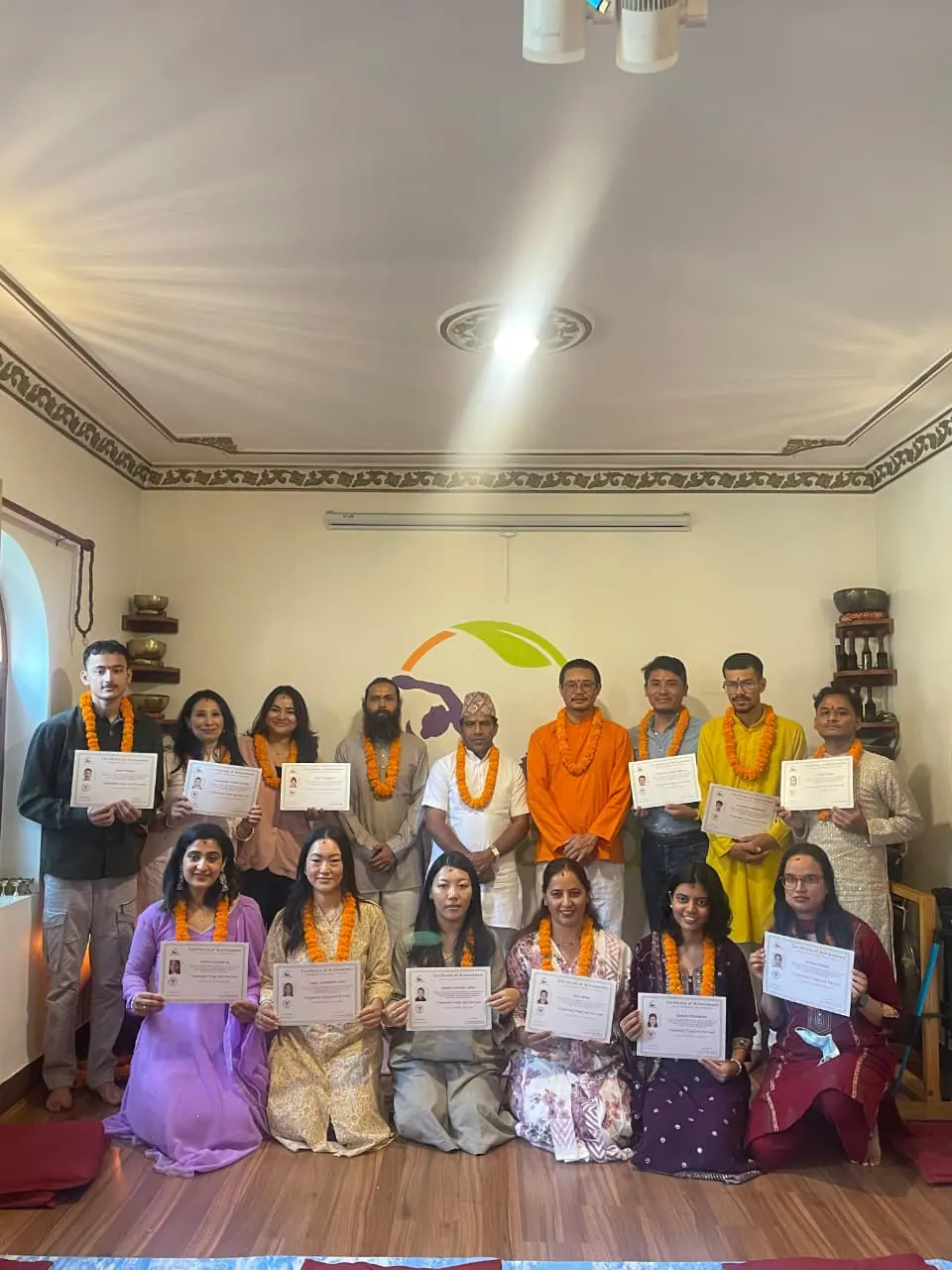
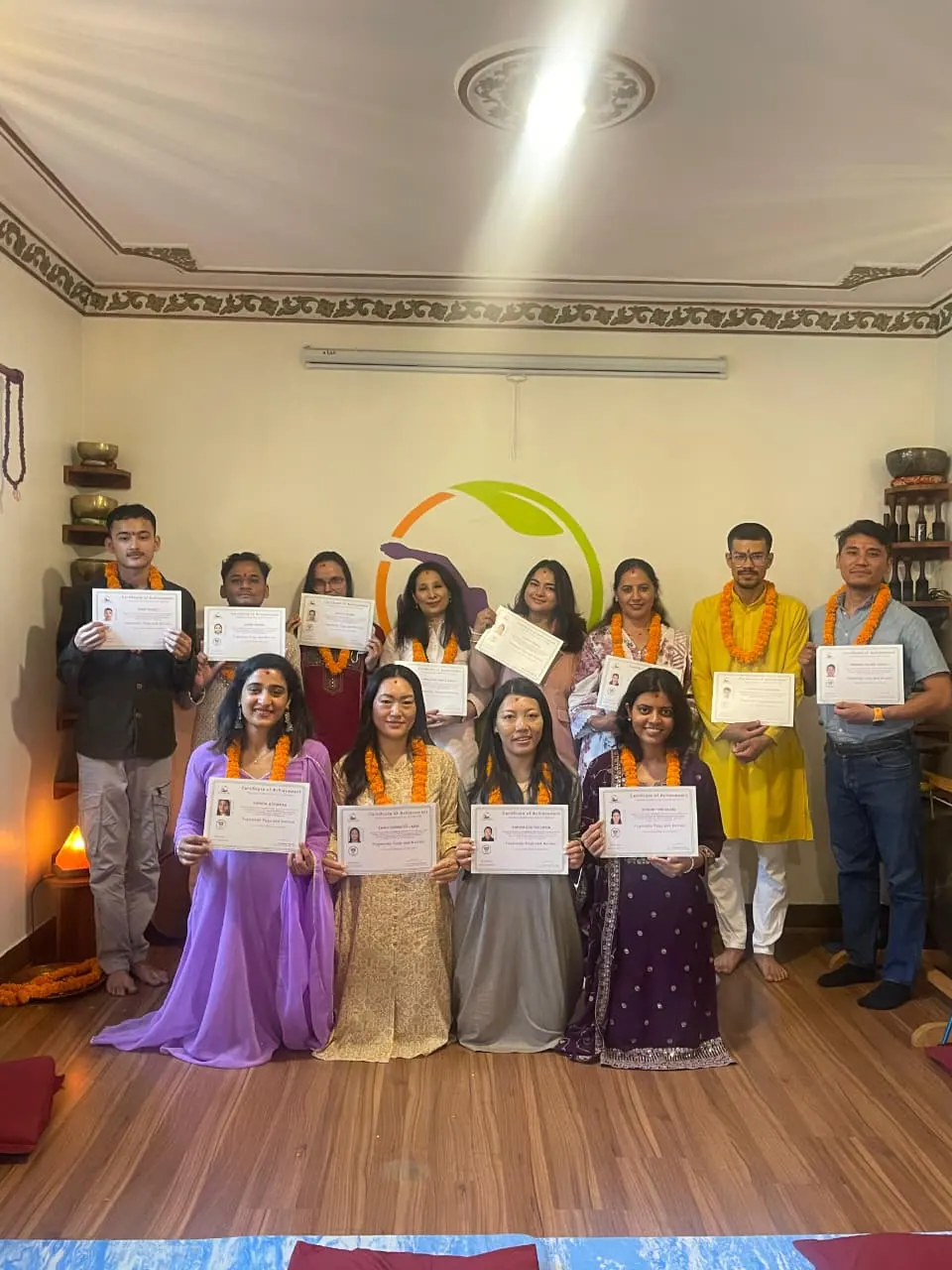
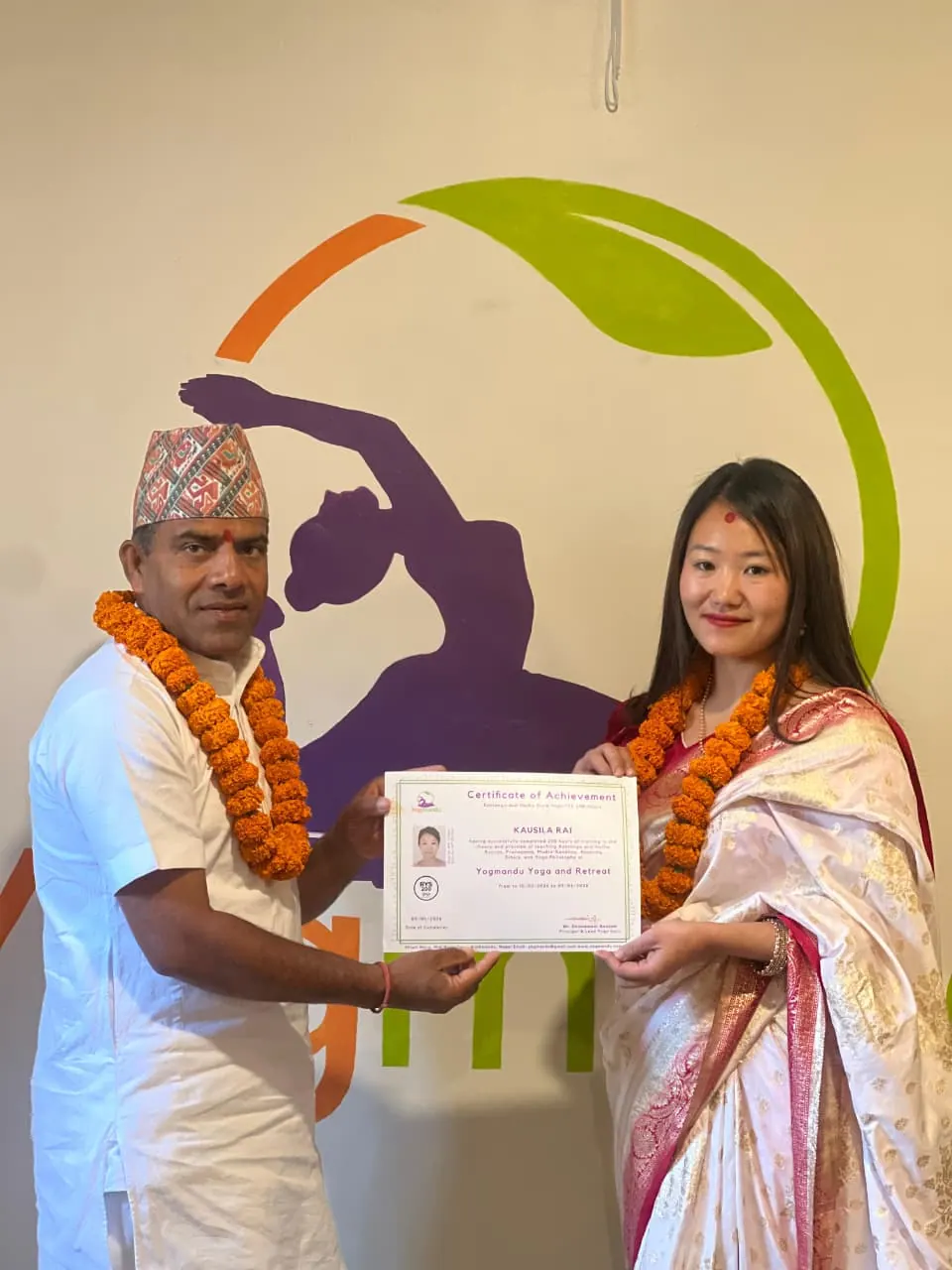
A school that meets Yoga Alliance's standards can register as an RYS, or Registered Yoga School. Yogmandu is Yoga Alliance RYS 200, 300 and 500 certified, and was Nepal's first Yoga Alliance registered school.
After graduating from an eligible registered school, a trainee can apply for the relevant teacher credential through Yoga Alliance. Registration is separate from completing the course itself, so always check the current requirements and membership process directly with Yoga Alliance before making career decisions.
What RYT 200 means
A 200-hour yoga teacher training is the standard entry-level foundation for someone who wants a structured education in yoga and may wish to begin teaching.
Yoga Alliance states that an RYT 200 applicant must complete one 200-hour training with an RYS 200. You cannot combine several shorter trainings to make up the 200 hours, and there is no teaching-hour requirement to register at this level, per Yoga Alliance's published standards for RYT credentials.
### What a 200-hour training can prepare you to do
A good 200-hour course can help you build a practical foundation in areas such as:
- Yoga asana and alignment principles.
- Breathwork and meditation foundations.
- Functional anatomy and movement awareness.
- Yoga philosophy and history.
- Sequencing a beginner-friendly class.
- Observation, communication, and safe teaching practice.
- Finding your voice as a new teacher.
After a serious 200-hour training, many graduates begin by teaching beginner classes, assisting experienced teachers, teaching friends or small groups, or continuing their personal practice before teaching publicly.
### What a 200-hour training does not guarantee
A certificate does not automatically make someone an expert in every style of yoga, every body, injury, health condition, or teaching environment.
It does not replace professional clinical training. It does not qualify you to diagnose injuries, provide physiotherapy, offer psychotherapy, or give medical advice. It also does not mean you must begin teaching immediately.
The strongest first-time teachers keep learning after graduation. They practise, observe, teach carefully, receive feedback, and remain honest about the limits of their experience.
For many students, a 200-hour residential training offers the time and immersion to build this foundation. If you are already living in Kathmandu or need more flexibility, Yogmandu also offers a non-residential option.
Why does the 300-hour training exist?
The 300-hour course exists because 200 hours is a beginning, not an endpoint.
A 300-hour advanced training is designed for teachers who already have a 200-hour qualification and enough personal practice or teaching experience to benefit from deeper study. The exact content differs by school, but advanced work may include more detailed anatomy, therapeutic considerations, philosophy, pranayama, meditation, subtle-body traditions, advanced sequencing, teaching methodology, research literacy, and mentorship.
It is not simply "more poses".
### Who should take a 300-hour course?
A 300-hour programme may suit you if you:
- Have completed a 200-hour training and feel ready to deepen your understanding.
- Have begun teaching and want more confidence, depth, and feedback.
- Want to study a particular area of yoga more seriously.
- Know that yoga teaching will be an important part of your work or long-term path.
- Want a smaller, more mentored environment for advanced learning.
At Yogmandu, cohort sizes are limited to 12 students. That matters because advanced learning requires more than lectures. In a small group, teachers can observe how you teach, answer questions that arise from your actual practice, and give feedback that is harder to provide in a large intake.
### Who should wait?
You may benefit from waiting if you are choosing a 300-hour course only because you feel pressure to collect credentials. More hours are not automatically more useful if you have not yet absorbed your 200-hour foundation.
There is value in taking time to practise, teach a little, read, attend classes with different teachers, and notice where your real questions are. A 300-hour training becomes more meaningful when you arrive with lived experience, not only a desire for a larger number on a certificate.
How 200 plus 300 becomes RYT 500
This is the point that confuses many trainees.
You do not need to find a course called "RYT 500" before you start your journey.
Yoga Alliance allows an RYT 500 credential through either of these routes:
1. Complete one 500-hour programme at an RYS 500. 2. Complete a 200-hour training at an RYS 200, then complete an additional 300-hour training at an RYS 300.
The 200-hour and 300-hour trainings may be completed at different schools as long as both schools hold the relevant active RYS designation. Yoga Alliance also requires 100 teaching hours after completion of RYS 200 or RYS 500 training for RYT 500 registration (standards document).
In everyday language:
200-hour foundation + 300-hour advanced training = 500 hours of training.
Your 300-hour course is not a replacement for the first 200 hours. It builds on it.
You can explore Yogmandu's 300-hour advanced training when you are ready, or compare all training pathways before applying.
What do E-RYT and YACEP mean?
The letters after a teacher's name can be useful, but they should be read carefully.
### E-RYT means Experienced Registered Yoga Teacher
The "E" means experienced. It indicates that a teacher has met Yoga Alliance requirements for both training and documented teaching experience.
For example, E-RYT 200 requires an eligible 200-hour training, at least 1,000 teaching hours after that training, and at least two years of teaching. E-RYT 500 has higher requirements, including 500 hours of eligible training, four years of teaching, and 2,000 teaching hours (standards document).
This can matter to a student because it suggests that the teacher has spent substantial time actually teaching — not only studying.
Yogmandu founder Yogi Arjun Rakhal holds ERYT 500 and YACEP credentials. Co-founder Dr. Chintamani Gautam holds a PhD in Yogic Science and ERYT 500 credentials.
### YACEP means Yoga Alliance Continuing Education Provider
YACEP stands for Yoga Alliance Continuing Education Provider. It is a designation for eligible experienced teachers who offer continuing education to other yoga teachers.
For a student, this may be relevant if you want to know whether a teacher has a recognised role in ongoing professional education. It still does not remove the need to look at the actual course, the teacher's approach, and whether the learning environment suits you.
Yoga Alliance is not a teaching licence
This is important.
Yoga Alliance registration is a professional registry and membership credential. It is not a government-issued licence to teach yoga, and it does not guarantee that every school, graduate, or class will be excellent.
A registry can set standards and create a shared framework. It cannot tell you everything about a school's culture, safety, depth, ethics, teaching quality, or whether the course is right for you.
That is not a reason to ignore registration. It is a reason to treat it as one useful factor rather than the only factor.
---
How to choose a training beyond the certificate
Before paying for any yoga teacher training, ask practical questions.
1. Who will actually teach each part of the course? 2. How many students are admitted to each cohort? 3. How much direct teaching practice will you receive? 4. How are contact hours structured? 5. Is there time for questions, feedback, and individual guidance? 6. What is included in the price? 7. What happens after graduation? 8. Does the school explain its limitations honestly?
At Yogmandu, cohorts are capped at 12 students because teacher training is relational work. You need space to ask questions, practise teaching, make mistakes safely, and receive feedback from people who know your name and your progress.
The best choice is not automatically the fastest, cheapest, longest, or most glamorous course. It is the one that gives you a solid foundation, trustworthy teachers, realistic expectations, and a learning environment in which you can do the work properly.