
Prenatal Yoga by Trimester: A Practical Guide
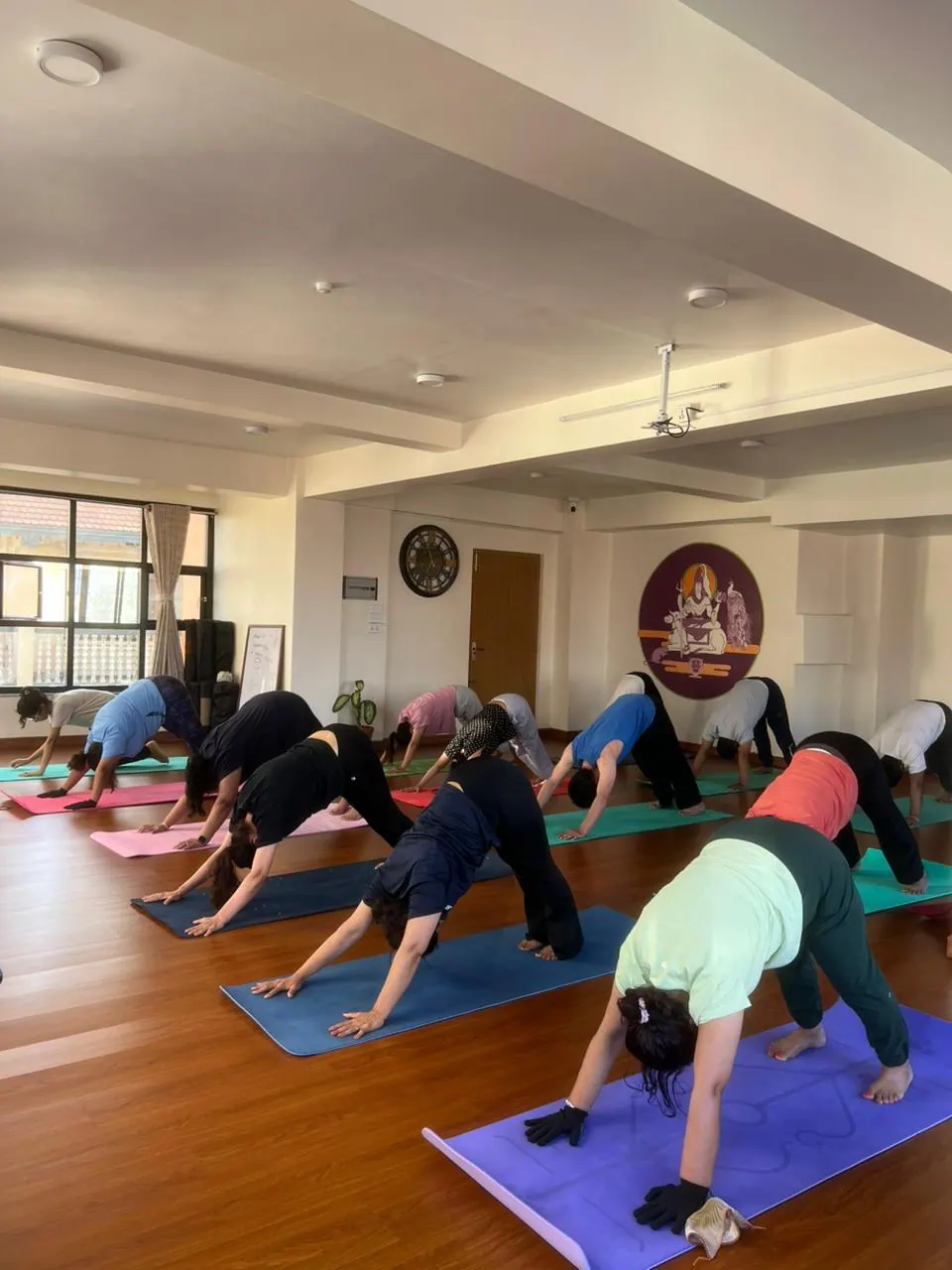
Yoga during pregnancy often needs to change by trimester. Learn useful modifications, warning signs and when to seek clinical advice.
Pregnancy changes your body quickly, and yoga practice needs to change with it. What felt comfortable before pregnancy, or even last month, may no longer feel right today.
This article is general information, not medical advice. Before starting, continuing or changing a yoga practice during pregnancy, get approval from your doctor, midwife or other clinician who knows your health and pregnancy. A prenatal yoga teacher can offer useful modifications, but they cannot replace individual medical guidance.
For many people with an uncomplicated pregnancy and clinical approval, gentle movement, breathing and rest can remain part of life. But pregnancy is not the time to prove flexibility, work through pain or follow an online sequence without checking whether it fits your own situation.
Advice also changes as pregnancy progresses. Your energy, balance, breathing, circulation, joints and abdominal space all change. The useful question is not "Can I still do this pose?" but "Does this version of movement make sense for my body, pregnancy and medical guidance today?"
First: when to stop and seek help
Stop practising and seek medical advice promptly if you have bleeding, fluid leaking from the vagina, severe pain, dizziness or fainting, regular painful contractions, or reduced foetal movement.
Other concerning symptoms can include chest pain, severe headache, unusual shortness of breath before exertion, calf pain or swelling, and weakness that affects balance. These are not symptoms to stretch through or "breathe past." Contact your clinician or seek urgent care as appropriate, following ACOG's guidance on exercise during pregnancy.
Even without an emergency symptom, pause and speak to your clinician if something feels distinctly wrong, unfamiliar or increasingly uncomfortable. Pregnancy yoga should make room for caution.
Why yoga changes through pregnancy
Pregnancy does not follow one fixed timetable. Some people feel energetic early on and tired later; others have nausea, pelvic discomfort, back pain or breathlessness much sooner. Previous yoga experience matters, but it does not remove the need for adaptation.
As pregnancy progresses, several practical changes affect movement:
- Your centre of gravity shifts, which can make balance less predictable.
- The growing uterus changes which lying and twisting positions are comfortable.
- Hormonal changes can make joints feel more mobile, which is not a reason to push further into stretches.
- Energy and recovery may vary significantly from day to day.
- Breath can feel different as the ribcage and abdominal area adapt.
A good prenatal practice is not a reduced version of an intense class. It is a responsive practice: slower when necessary, supported where useful, and willing to leave poses out.
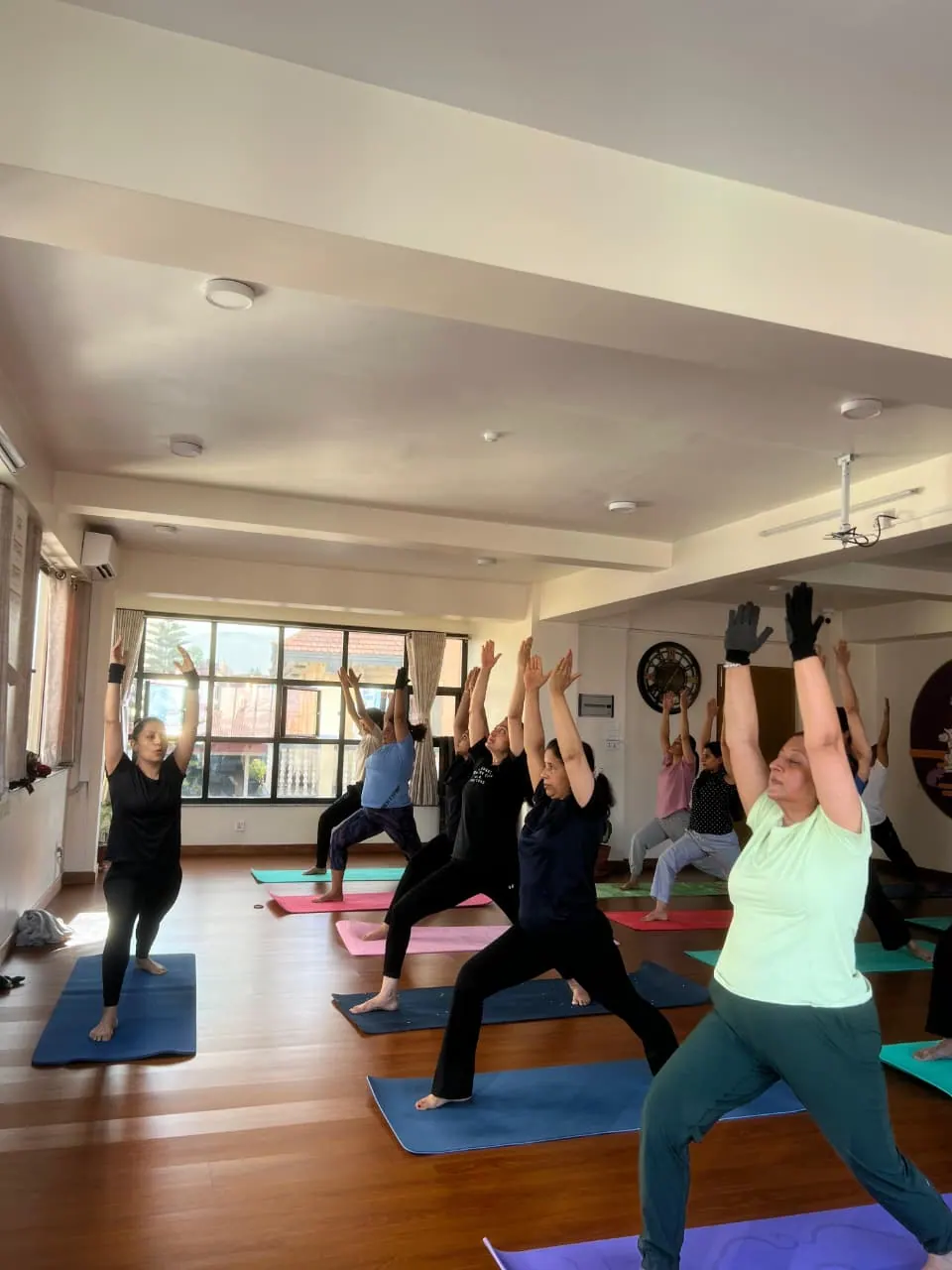
First trimester: conserve energy and stay cool
The first trimester can be confusing because there may be few visible changes while the body is already working hard. Fatigue, nausea, breast tenderness, dizziness and changing appetite are common experiences for many people.
If your clinician has approved exercise, a familiar gentle practice may still be generally suitable for many people. But the intensity often needs to drop before there is any visible bump.
### What may help
Choose shorter, quieter sessions when energy is low. Gentle standing movements, supported seated positions, easy mobility for the shoulders and hips, and calm breathing can be more realistic than a strong flow.
It is also reasonable to stop early. A ten-minute practice followed by rest is still a practice.
### What to be cautious about
Avoid overheating. Hot yoga, heated rooms and strenuous exercise in hot conditions are generally discouraged in pregnancy because overheating and dehydration are concerns. Keep the room comfortable, drink water as needed and do not treat sweating as a sign of a successful class.
This is also a time to reduce forceful abdominal work, high-impact transitions and anything that leaves you breathless or depleted. Breath retention, including long held pauses after inhaling or exhaling, is usually not appropriate for pregnancy practice.
If nausea is strong, a few minutes of supported upright breathing may be more suitable than lying down. Your own clinician can advise if nausea, vomiting, dizziness or exhaustion is severe or persistent.
Second trimester: adapt for space and balance
For many people, the second trimester is when pregnancy becomes more physically obvious in yoga. The abdomen grows, balance changes and positions that were once automatic may need more thought.
From around 16 weeks, prolonged lying flat on the back is generally discouraged. The growing uterus can press on a major blood vessel that returns blood to the heart, which may lower blood pressure and cause dizziness or faintness. Guidance from the NHS commonly recommends avoiding extended back-lying positions after this point, especially if they produce symptoms.
This does not mean every moment on the back causes harm for every person. It means it is sensible to modify, keep positions brief where clinically appropriate, and respond immediately to discomfort. Check with your own clinician.
### Useful second-trimester modifications
A bolster can raise the upper body for a reclined rest position. Side-lying rest, often with a pillow or bolster between the knees, can be more comfortable. A wall or chair can make standing poses feel steadier.
Avoid lying on the stomach once that becomes uncomfortable or impractical. Instead of trying to preserve every familiar pose, choose alternatives that create space.
For twists, favour open twists led from the upper back and shoulders rather than deep, closed twists that compress the belly. Think of creating room across the collarbones and ribs, not rotating forcefully from the base of the spine.
### Balance is different now
As the centre of gravity moves forward, single-leg standing poses may feel unexpectedly unstable. Use a wall, chair or teacher's guidance. Step rather than jump between positions. Widen the stance if that feels more stable.
There is no prize for practising without props. Blocks, bolsters, chairs and walls make a practice more accessible and can reduce the pressure to strain.
Third trimester: stability, breath and rest
The third trimester is often a time to simplify. Some people continue moving comfortably; others need a much quieter practice. Both are normal.
The focus often shifts from range of motion to comfort, stability, breath awareness and rest. This is not "doing less" in a negative sense. It is responding intelligently to a body carrying more weight, managing a different balance point and preparing for changing daily demands.
### Prioritise support
Supported hip-opening positions may feel helpful for some people, but avoid forcing depth. A wide, comfortable stance can be preferable to a deep stretch. Use blocks under the hands, sit on a folded blanket, lean on a chair or rest against a wall.
For relaxation, many people prefer a side-lying position with support under the head, between the knees and behind the back. A propped, semi-reclined position may also work for some people. If you feel dizzy, nauseous, breathless or uncomfortable in any position, come out of it and speak with your clinician. The HSE's recommended exercises in pregnancy cover similar ground.
### Let breath guide the pace
Breathing practices in late pregnancy should feel calm and natural. There is no need to take enormous breaths or hold the breath. Gentle awareness of the ribs, sides and back of the body can be more useful than trying to control every inhalation.
The third trimester is also a good time to practise transitions: getting down to the floor, rising slowly, using support and pausing before changing position. These small choices can make a real difference to comfort.
What is generally avoided throughout pregnancy
Individual recommendations vary, especially if you have prior yoga experience, an injury or a medical condition. Still, with clinician approval, prenatal teachers commonly modify or avoid the following:
- Hot yoga and other practices that risk overheating
- Strong abdominal work, including intense crunching or forceful core drills
- Breath retention and forceful breathing techniques
- Deep closed twists that compress the abdomen
- Deep backbends that feel compressed, unstable or uncomfortable
- High-impact movement and abrupt transitions
- Positions with a significant fall risk
- Inversions unless you were already very experienced, feel stable and have been specifically cleared by your clinician
- Prolonged lying flat on the back later in pregnancy
The key is not a rigid forbidden-pose list. A familiar pose can become unsuitable if it causes pain, pressure, dizziness, breathlessness, pelvic discomfort or instability. A qualified prenatal teacher can help you find a useful alternative.
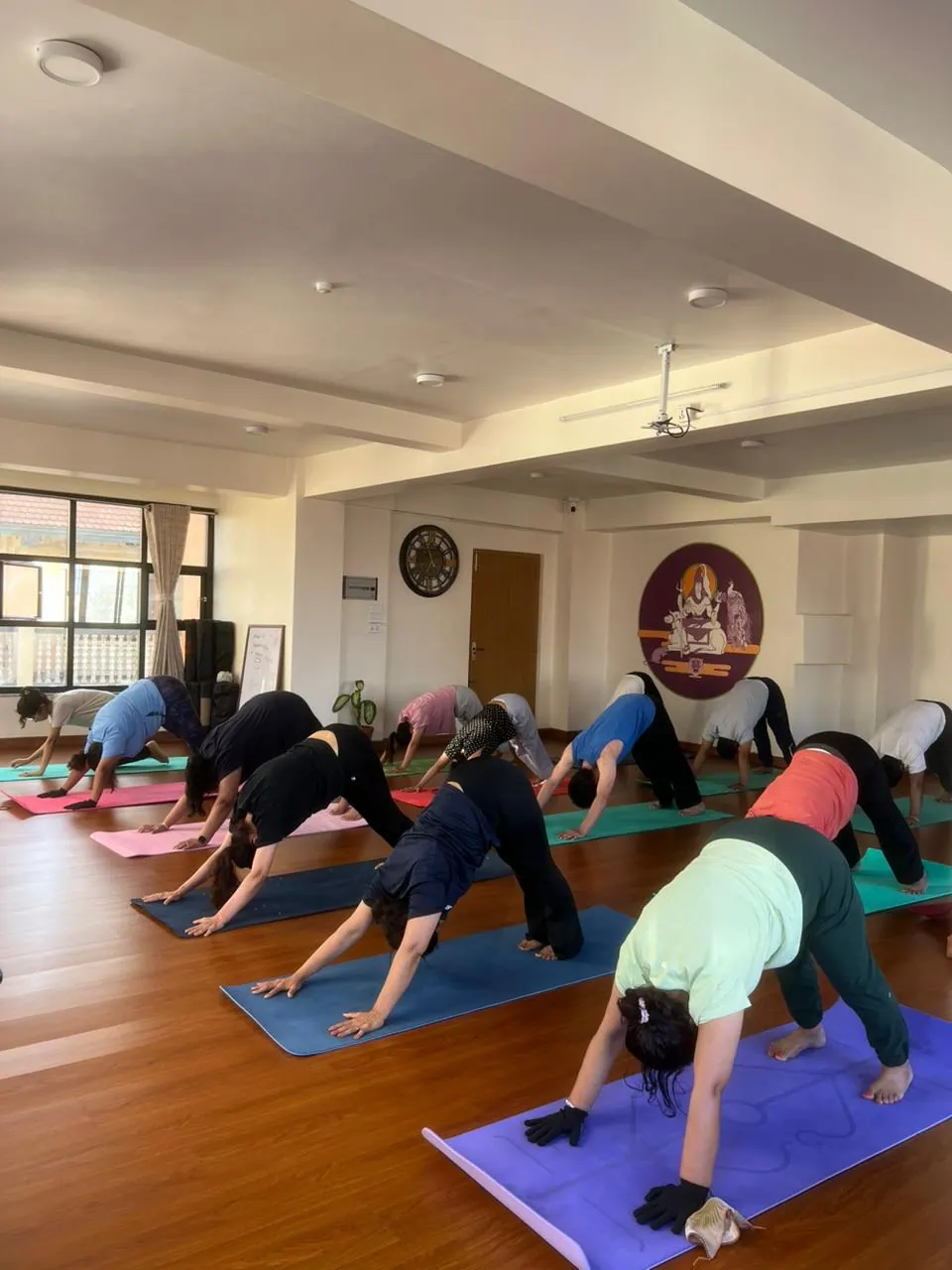
Props are part of the practice
Props are not only for beginners. During pregnancy, they can help change angles, create support and make rest genuinely restorative.
- Bolsters can support side-lying rest, seated positions and a gentle incline.
- Blocks can bring the floor closer in standing and seated poses.
- Chairs provide support for balance, seated movement and standing adaptations.
- Walls offer feedback and stability in standing positions.
- Blankets can cushion knees, raise the hips or support the head.
A prop should make the body feel more settled, not trap you in a position that is difficult to leave. Keep your practice simple enough that you can always come out of a pose comfortably.
Returning after birth
Postnatal yoga is not simply a return to the pre-pregnancy routine. Recovery after birth takes time, and the right timing depends on the kind of birth, healing, sleep, energy, pelvic-floor symptoms and your clinician's advice.
Get clearance before returning to structured exercise, especially after a caesarean birth, complications, significant tearing or persistent pain. Begin gently. Breathing, rest, walking and simple mobility may be more appropriate at first than strong abdominal work or demanding flows.
How we approach this at Yogmandu
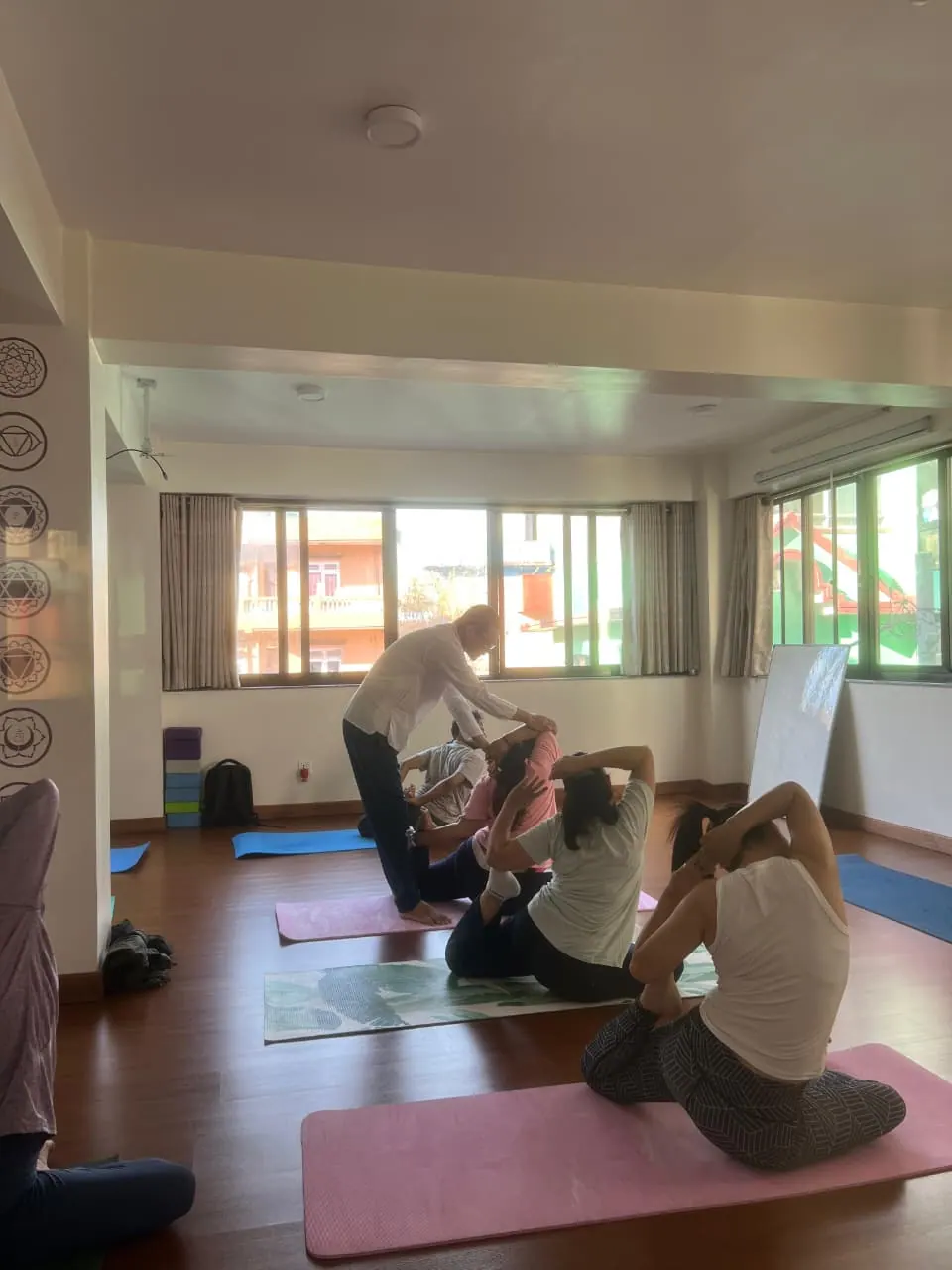
At Yogmandu in Mid-Baneshwor, Kathmandu, we approach prenatal practice as an individual process rather than a standard sequence for every pregnant student. Pregnancy history, current comfort, prior movement experience and medical guidance all matter.
Our teachers use practical modifications and props, including bolsters, blocks, chairs and wall support, to help students find positions that are manageable on the day. We do not treat discomfort as something to overcome through determination.
Our prenatal and postnatal yoga offering sits within our wider work with yoga for specific groups. If you are considering a class, tell us about your trimester, previous experience, injuries, symptoms and any advice from your clinician before you begin.
Frequently asked questions
### Is yoga safe during pregnancy?
Yoga may be generally suitable for many people with an uncomplicated pregnancy, but it is not automatically suitable for everyone. Get approval from your doctor or midwife first, and choose a practice that can be adjusted for pregnancy rather than assuming a regular class will fit unchanged.
### Can I do yoga in the first trimester?
Many people continue gentle movement in the first trimester with clinical approval. However, fatigue, nausea and dizziness can be significant, so shorter, cooler and lower-intensity sessions may be more appropriate than trying to maintain a previous routine.
### Which yoga poses should I avoid while pregnant?
Avoiding or modifying hot yoga, strong abdominal work, breath retention, deep closed twists, intense backbends and positions with a high risk of falling is commonly recommended. Prolonged flat-on-the-back positions are generally discouraged from around 16 weeks, and inversions need individual clinical clearance.
### Can I lie on my back in yoga while pregnant?
After around 16 weeks, it is generally advised not to lie flat on the back for long periods because the uterus can press on a major vein and contribute to dizziness or low blood pressure. A side-lying rest or a supported incline is often more comfortable; ask your clinician what is appropriate for you.
### What should I do if I feel dizzy in a prenatal yoga class?
Stop immediately, move slowly into a comfortable position and tell the teacher. If dizziness does not settle quickly, or occurs with bleeding, fluid leakage, severe pain, contractions or reduced foetal movement, seek medical help promptly.
### Can I start prenatal yoga if I have never done yoga before?
Possibly, but first get approval from your doctor or midwife. A beginner-friendly prenatal setting with a teacher who knows you are new to yoga can be a more sensible starting point than trying to copy advanced poses from videos.
---
If you are pregnant and considering yoga in Kathmandu, discuss it with your clinician first, then contact Yogmandu on WhatsApp at +977-9810263277 to ask about the most appropriate class format for your stage of pregnancy.
Sources
- Exercise During Pregnancy — American College of Obstetricians and Gynecologists (ACOG)
- Exercising in pregnancy — NHS
- Recommended exercises in pregnancy — HSE Ireland