Nervous about your first yoga class in Kathmandu? Learn what to wear, bring and expect, with practical reassurance for complete beginners.
Your first yoga class can feel more intimidating than it needs to be.
You may be wondering whether everyone else will be flexible, whether you will understand the instructions, whether you need expensive clothes, or whether someone will notice that you do not know your left from your right.
The honest answer is that most people remember having those same worries.
A yoga class is not a test of flexibility, fitness, balance or calmness. You do not need to arrive already good at yoga. You arrive to learn, move, breathe and notice how your body feels.
If you are new to yoga in Kathmandu, this guide explains what usually happens from the moment you walk into the studio until you leave.
What to wear
Wear clothes that let you move comfortably.
Leggings, track trousers, shorts, a T-shirt, a light top, or loose exercise clothing are all fine. You do not need matching yoga clothes, expensive brands, special footwear, or anything that looks impressive in a photograph.
Choose something that does not feel restrictive when you lift your arms, bend your knees or sit on the floor.
Most yoga is practised barefoot because bare feet can grip the mat more securely and help you feel your balance. You may want socks for arriving, leaving, or resting at the end of class, especially on a cool Kathmandu morning.
Avoid clothing that you constantly need to pull into place. A top that feels comfortable while bending forwards or raising your arms will make the class easier to enjoy.
What to bring
For a first class, keep it simple.
Bring water if you would like it, especially if you have walked to the studio or the day is warm. You may also want a small towel if you tend to perspire.
Many studios provide yoga mats and basic props such as blocks, straps, cushions or blankets. It is still fine to bring your own mat if you already have one, but do not delay trying yoga because you have not bought equipment.
You do not need to bring:
- Yoga shoes
- A yoga towel unless you prefer one
- A special water bottle
- A notebook
- A flexible body
- Knowledge of yoga poses
- A plan to be perfect
For a complete beginner, the most useful things to bring are comfortable clothes, a little curiosity and permission to take things slowly.
When to arrive
For your first class, arrive around 10 to 15 minutes early if possible.
This gives you time to find the studio, remove your shoes if required, use the toilet, settle your belongings and speak with the teacher before the class begins. Arriving early also means you do not have to enter while everyone is already sitting quietly on their mats.
When you walk in, you may see people placing mats on the floor, stretching gently, sitting quietly, or chatting softly. You do not need to copy anyone.
The teacher or studio team can show you where to put your bag, where to place your mat, and what props to take. If you are unsure, ask. Asking a basic question is normal and much better than spending the whole class worried about doing something wrong.
Should you eat before yoga?
Most people find yoga more comfortable on a relatively light stomach.
If you are attending a class after a main meal, it is usually more comfortable to leave some time for digestion before practising. A light snack beforehand may suit you better if you are hungry or coming straight from work.
There is no need to arrive weak, dehydrated or overly hungry. Listen to your body. If you need something small before class, choose food that feels easy for you to digest.
Try to avoid a very heavy meal immediately before yoga, especially if the class includes forward bends, twists or movement that places pressure on the abdomen. Start slowly, choose a class at an appropriate level, and stop or rest if you feel pain or excessive fatigue.
What happens when the class starts?
A yoga class usually begins more quietly than a gym class.
The teacher may invite everyone to sit or lie down for a moment. You may be asked to notice your breath, feel your feet on the mat, or simply take a few slow breaths.
This can feel unfamiliar at first. Many of us are used to arriving somewhere and immediately doing something. Yoga often begins by giving the body a moment to arrive.
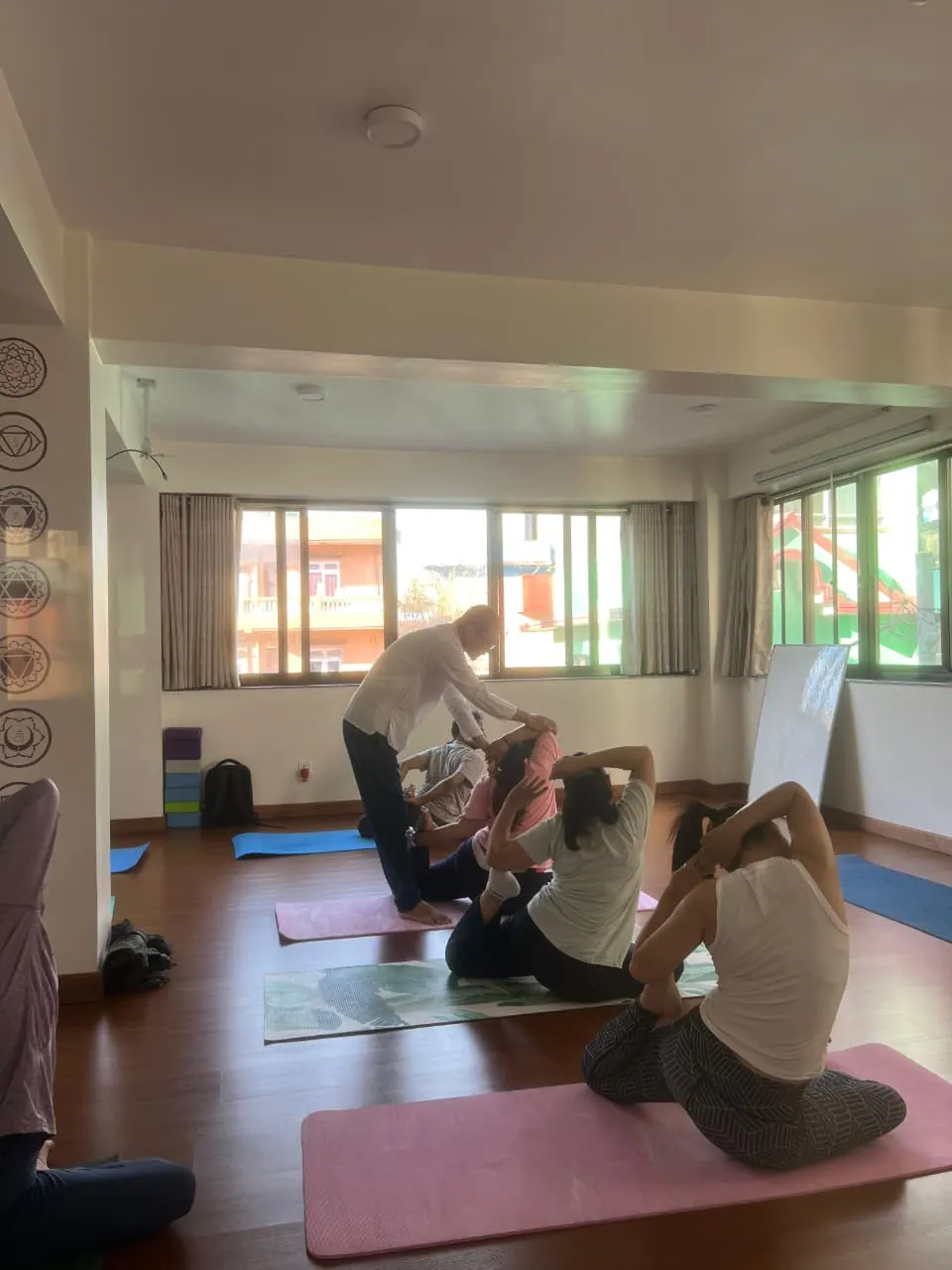
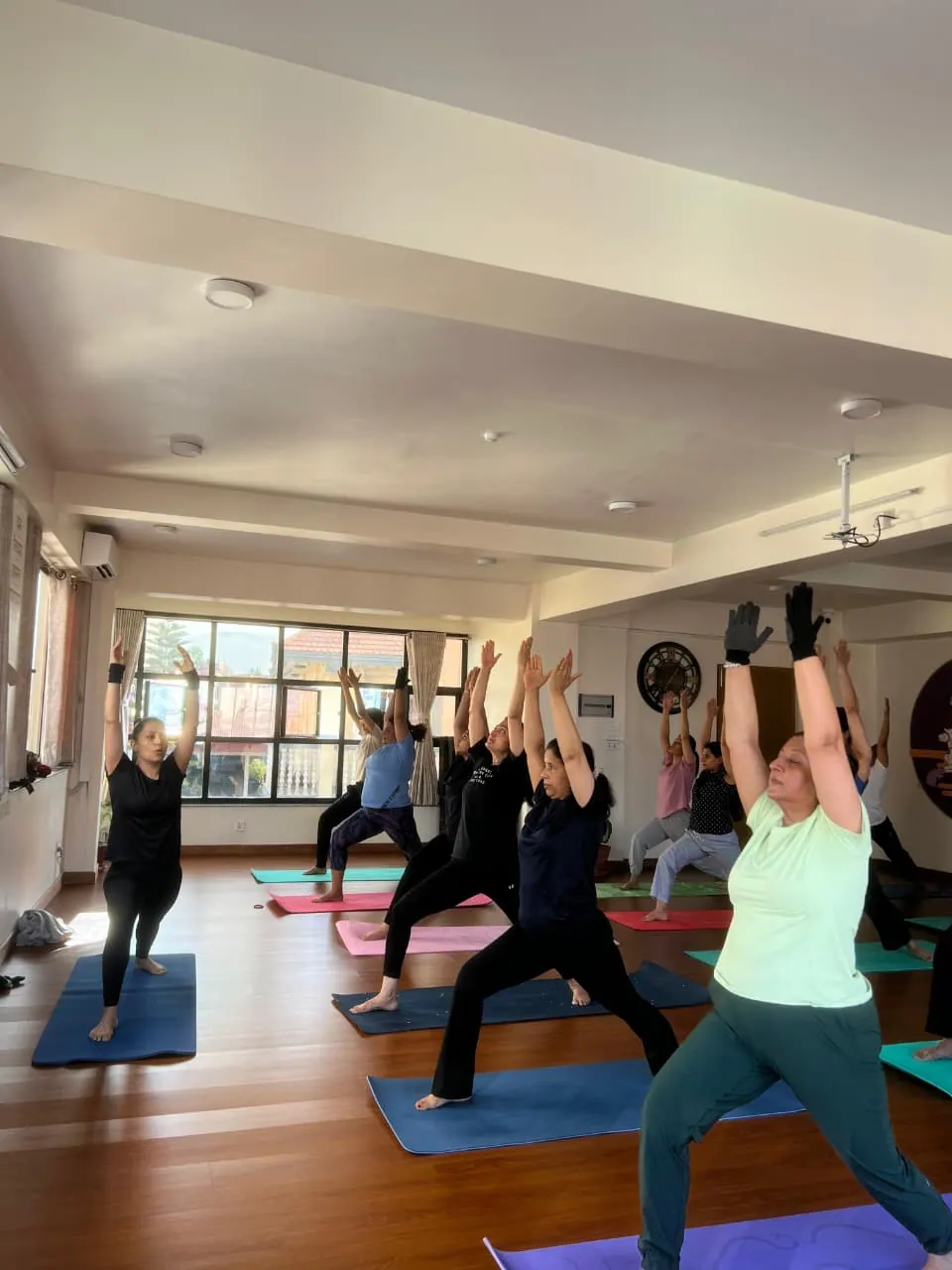
After that, the class commonly moves through a gentle warm-up. You may circle your shoulders, move your neck, stretch your arms, bend and straighten your knees, or move slowly through the spine.
The exact class structure depends on the style and teacher, but a beginner-friendly class often includes:
1. A quiet arrival and simple breathing. 2. Gentle warm-up movements. 3. Standing poses to build balance and strength. 4. Seated or floor-based poses for mobility and rest. 5. A slower cool-down. 6. Final relaxation while lying still.
You do not need to memorise this order. The teacher will guide you through it.
What if the teacher uses Sanskrit names?
You may hear Sanskrit pose names such as Tadasana, Balasana or Savasana.
Nobody expects you to know them.
Teachers normally demonstrate the pose, describe it in plain language, or use both the Sanskrit and English names. You may hear "Mountain Pose", "Child's Pose" or "rest on your back", and that is enough.
You do not need to pronounce anything. You do not need to remember the names after one class. Over time, some words may become familiar, but they are not an entrance requirement.
If you are unsure what the teacher means, look around briefly, ask a question, or choose a simple resting position until you understand.
Can you rest during class?
Yes.
You can rest at any time.
Resting is not failing. It is part of practising safely and learning to pay attention to your body.
Child's Pose, lying on your back, sitting comfortably, or simply pausing with your hands on your thighs can all be valid choices. If you feel breathless, overwhelmed, dizzy, uncomfortable or tired, pause.
Yoga is not supposed to be an endurance competition. You do not receive extra credit for ignoring discomfort.
If a movement causes sharp pain, stop. If you are not sure whether something is safe for you, ask the teacher. Guidance from the US National Center for Complementary and Integrative Health notes that yoga is generally safe for healthy people when practised properly under a qualified instructor, and that beginners should avoid extreme practices such as headstands, shoulder stands, the lotus position and forceful breathing.
Are you too inflexible for yoga?
No.
This is one of the most common reasons people delay their first class, and it is based on a misunderstanding.
Flexibility is not an entry requirement for yoga. It can be one possible outcome of regular movement, but yoga is also about strength, balance, breathing, awareness and rest.
You do not need to touch your toes. You do not need to put your leg behind your head. You do not need to bend in the same way as the person beside you.
A pose should fit your body on that day. A teacher may offer a block, a strap, bent knees, a shorter stance, a chair, a wall or a completely different version of the movement.
Some people find that their flexibility improves over time. Others remain naturally less flexible but become stronger, more mobile and more comfortable in their bodies. Both are valid experiences.
What if you fall over, make noise or get confused?
You might wobble in a balance pose.
You might place the wrong foot forward.
You might not know your left from your right when the teacher gives a quick instruction.
You might make a noise when moving, breathing or settling into a pose.
All of this is normal.
In a good yoga class, people are mostly paying attention to their own breath, body and balance. They are not studying you. The person who looks very calm may also be trying to remember which side they did first.
If you lose balance, simply step down and begin again. If you become confused, pause and watch the teacher. If you laugh, that is fine too.
Yoga does not require silence from the body. It requires kindness towards it.
What is Savasana, and why do people lie still?
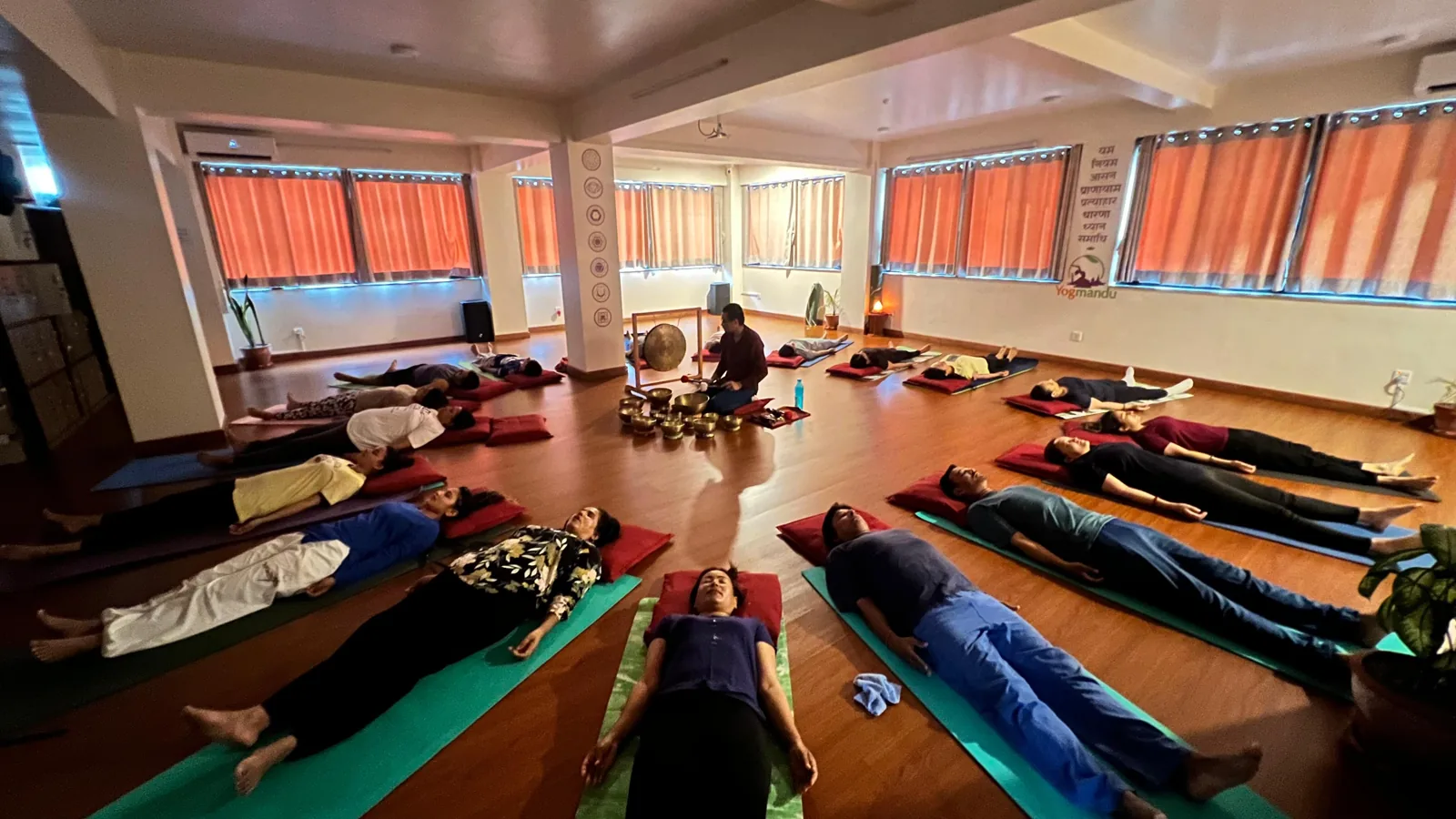
Most classes end with Savasana, often called final relaxation.
You usually lie on your back with your arms and legs comfortable, close your eyes if you wish, and remain still for a few minutes. The teacher may speak softly, guide breathing, or allow quiet.
At first, lying still can feel strange. You may feel restless, wonder whether you are doing it correctly, notice your thoughts becoming louder, or feel like checking your phone.
That is common.
Some people feel deeply rested. Some people feel emotional. A few people may cry, become sleepy, or simply feel relieved that they have stopped moving for a moment. There is nothing embarrassing about this.
You can keep your eyes open, bend your knees, use a blanket, or sit up if lying down is uncomfortable. Rest looks different for different bodies.
Who can come to a beginner class?
Yoga is not only for young, slim, athletic or already flexible people.
People come to yoga at different ages, body types, fitness levels and stages of life. Some come because they have been active for years. Some come after a long break from exercise. Some want to move more gently. Some are visiting Kathmandu and want a calm class during their travels.
The right class should meet you where you are.
If you have an injury, persistent pain, recent surgery, high blood pressure, glaucoma, arthritis, sciatica, pregnancy, or another medical condition, tell the teacher before class. Depending on the situation, you may need modifications, a gentler class, a private session, or advice from your healthcare professional before beginning.
Yoga is generally safe for many people, but poses may need to be changed or avoided for particular health conditions, including knee or hip injuries, lumbar spine disease, severe high blood pressure, balance problems and glaucoma.
How we approach this at Yogmandu
At Yogmandu, we understand that a first class can feel like entering an unfamiliar room with its own language and rules. Our aim is to make the experience clear, calm and practical.
You do not need prior yoga experience to attend. Tell the teacher that it is your first class, and mention any injuries, pregnancy, medical condition, pain or movement concern before the session begins. This helps the teacher offer suitable options.
Yogmandu is a yoga school in Mid-Baneshwor, Kathmandu, founded in 2018. We offer beginner-friendly options alongside drop-in, private and online classes, so you can begin in a way that feels manageable rather than overwhelming.
A drop-in class can be a low-risk first step. You can try a class, notice how it feels in your body, and decide what type of practice suits you before making a bigger commitment.

Choosing your first class
For a first experience, choose a class described as beginner-friendly, gentle, foundational or suitable for all levels.
A slower class gives you time to understand the shapes, ask questions and learn how your body responds. It is usually a better beginning than choosing the fastest or most demanding class because you think you should challenge yourself immediately.
Look at the class schedule and choose a time that allows you to arrive without rushing. If you are unsure which class is suitable, read Yogmandu's guide to yoga for beginners before you come.
Your first class does not need to be a major life decision. It can simply be one hour set aside to see what yoga feels like.
Frequently asked questions
### Do I need to bring my own yoga mat?
Not necessarily. Studios commonly provide mats and basic props, but you can bring your own mat if you prefer. Check the class information beforehand if you want to be certain about what is available.
### What if I cannot do a pose?
Use a simpler version, take a prop, rest, or ask the teacher for an alternative. You do not need to copy the deepest version of any pose for the practice to be worthwhile.
### Will everyone be looking at me?
Probably not. Most people are concentrating on their own balance, breath and movement. A supportive yoga class should not make beginners feel watched or judged.
### Can I go to yoga if I am not fit?
Yes, provided you choose a suitable beginner or gentle class and work within your own limits. If you have a medical condition, injury or concern about exercise, speak with a healthcare professional and tell the teacher before class.
### How will I feel the next day?
You may feel relaxed, energised or pleasantly aware of muscles you do not use often. Mild stiffness can happen after unfamiliar movement, but sharp pain, worsening symptoms or pain that does not settle should not be ignored.
---
Sources
- Yoga: What You Need To Know — US National Center for Complementary and Integrative Health (NCCIH)