Planning a yoga teacher training or retreat in Nepal? Compare Kathmandu weather, festivals, rain, air quality and packing advice month by month.
The best month to come to Nepal for yoga is not exactly the same for everyone.
Some visitors want blue skies and comfortable daytime weather. Some want a quieter, greener Kathmandu and lower travel costs. Some dislike heat. Others want to experience festivals, plan a trek after training, or simply find a month that makes it easier to stay focused for four weeks.
Kathmandu is not a tropical beach destination, and it is not an extreme Himalayan base camp either. At roughly 1,400 metres above sea level, the valley has distinct seasons. A yoga teacher training or retreat here can be rewarding at any time of year if you understand the trade-offs before you book.
Kathmandu seasons at a glance
For a month-long residential programme, daily life matters as much as the weather forecast. Think about mornings, laundry, walking outside, sleep, studio temperature, air quality, and how much energy you want to reserve for travel beyond class.
Spring: March to May
Spring is one of the most popular times to visit Nepal. Days become warmer, gardens and hillsides grow greener, and the weather often feels lively without the full intensity of monsoon rain.
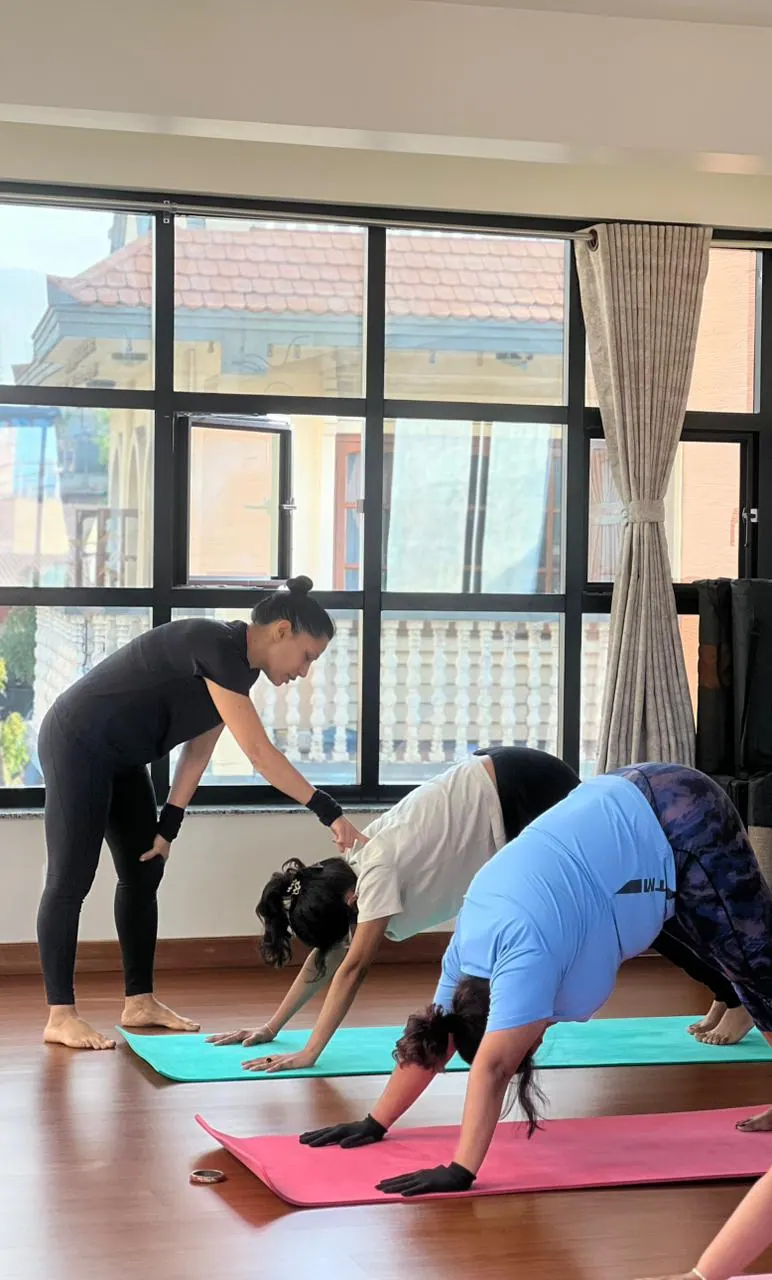
March is usually comfortable for many visitors, especially if you are coming from a cold climate. April and May become warmer, and afternoons can feel hot in Kathmandu. This is manageable for yoga training, but you may prefer lighter clothes, a refillable water bottle, and a willingness to move more slowly during the middle of the day.
### What practice feels like
Morning practice is usually pleasant, while midday can become warm. Early starts, shaded walks, and breathable clothing make a real difference. Spring can be especially good if you want to combine your training with sightseeing, short hikes, or travel in Nepal afterwards.
### Festivals to know
Holi often falls in March. It is joyful, colourful, and energetic, but it can also mean crowds, music, water, and coloured powder in public spaces. If you want to join it, bring clothes you do not mind staining. If you prefer quiet, plan your day around it.
Buddha Jayanti, which marks the birth, enlightenment, and passing of the Buddha in Buddhist tradition, often falls around April or May depending on the lunar calendar. It can be a meaningful time to visit Buddhist sites such as Boudhanath or Swayambhunath, though exact dates change each year.
### What to pack
- Light layers for cool mornings and warm afternoons.
- Breathable yoga clothing.
- A sun hat, sunglasses, and sunscreen.
- Comfortable shoes for city walking.
- A light waterproof layer in case of spring showers.
Monsoon: June to August
Monsoon is the season many travellers avoid, but it can be the right choice for the right person.
Kathmandu becomes lush and green. The city often feels quieter, and some travellers find the rain creates a naturally inward mood that suits study, journalling, rest, and consistent yoga practice. You may also find better availability and sometimes lower prices outside peak travel periods.
The honest trade-off is simple: it is genuinely wet.
Rain may arrive in heavy bursts, often later in the day, but there can also be long stretches of damp weather, muddy roads, leeches on rural trails, delayed domestic travel, and limited mountain visibility. Drying clothes takes longer. Shoes can stay wet. Outdoor plans need flexibility.
### What practice feels like
The studio can feel humid, and you may sweat more during physical practice. On the other hand, rain outside can make indoor meditation, pranayama, sound healing, and slower yoga practices feel especially peaceful.
If your main purpose is focused training rather than trekking or mountain photography, monsoon can be a deeply rewarding season.
### What to pack
- A reliable rain jacket or poncho.
- Quick-drying yoga and everyday clothes.
- Sandals or shoes that can handle wet streets.
- A compact umbrella.
- A waterproof bag cover or dry bag for electronics and documents.
- Extra socks.
Autumn: September to November
For many visitors, autumn is the easiest and most comfortable time to come to Nepal.
The monsoon usually recedes, the air often feels clearer, daytime temperatures are pleasant, and the chances of good views improve. This is also Nepal's busiest period for tourism, trekking, and many retreat-style trips.
If you are travelling to Nepal for the first time and want the smoothest all-round experience, autumn is a strong choice.
### What practice feels like
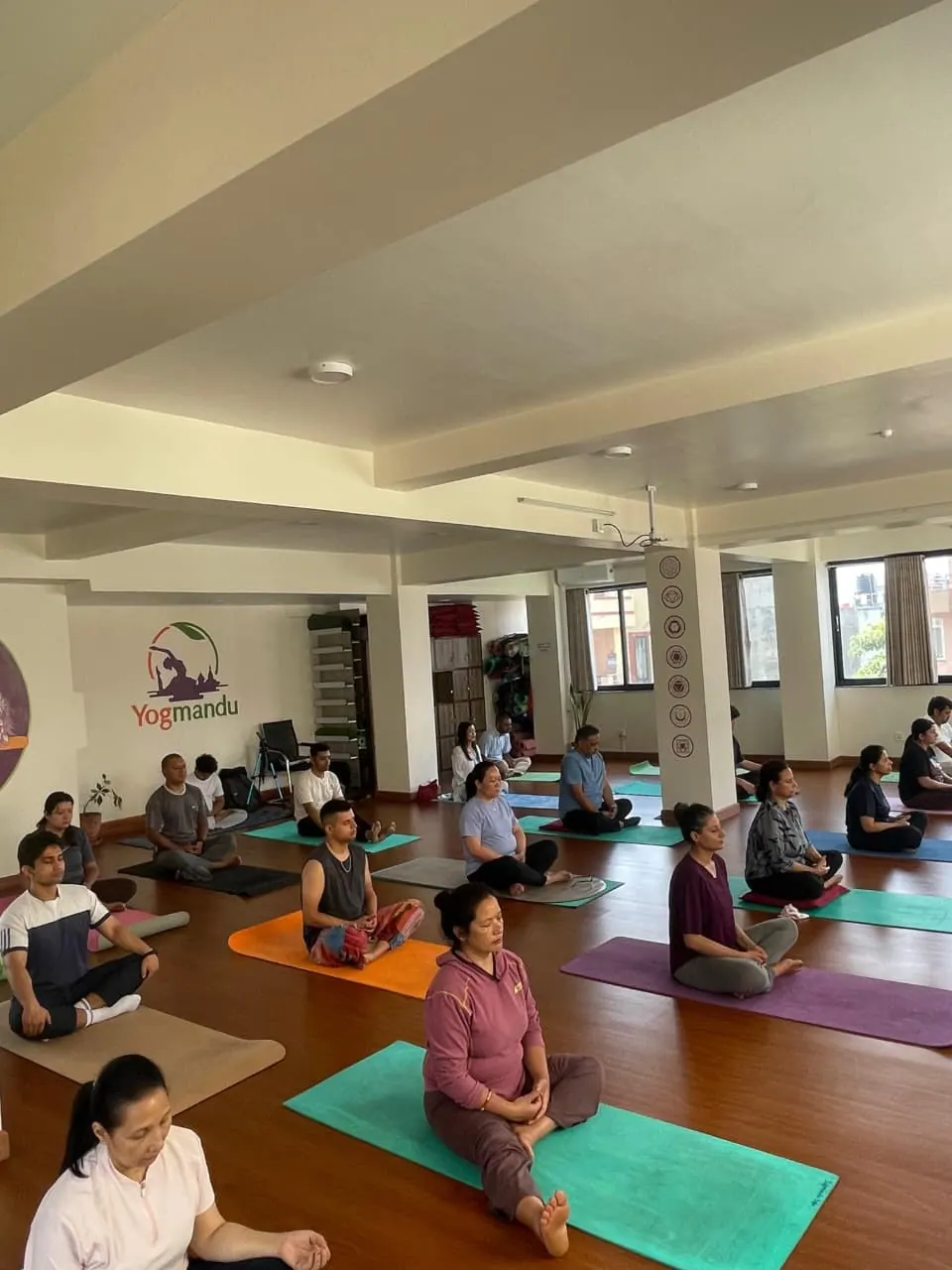
Mornings can be fresh without being harsh. Days are often comfortable enough for walking, sightseeing, and study. You are less likely to feel defeated by rain or extreme cold, and it is easier to plan activities outside training hours.
The trade-off is demand. Flights, hotels, trekking routes, and popular restaurants can be busier. Book early if your dates are fixed.
### Festivals to know
Dashain, Nepal's largest festival, often falls in September or October. Tihar follows around the same period. These festivals can be beautiful times to be in Kathmandu: families gather, homes are decorated, lights appear across neighbourhoods, and the rhythm of the city changes.
They can also affect business hours, transport patterns, staffing, and the availability of some services. A well-organised school can advise you about what your training schedule includes, but visitors should come with patience and an interest in local life rather than expecting every day to run exactly like home.
### What to pack
- Light yoga clothes for daytime.
- A fleece or warm layer for early mornings and evenings.
- Comfortable walking shoes.
- A light rain layer, especially in September.
- A modest outfit suitable for temple visits and festival invitations.
Winter: December to February
Winter in Kathmandu is often sunny and dry during the day, but the mornings and evenings can be surprisingly cold.
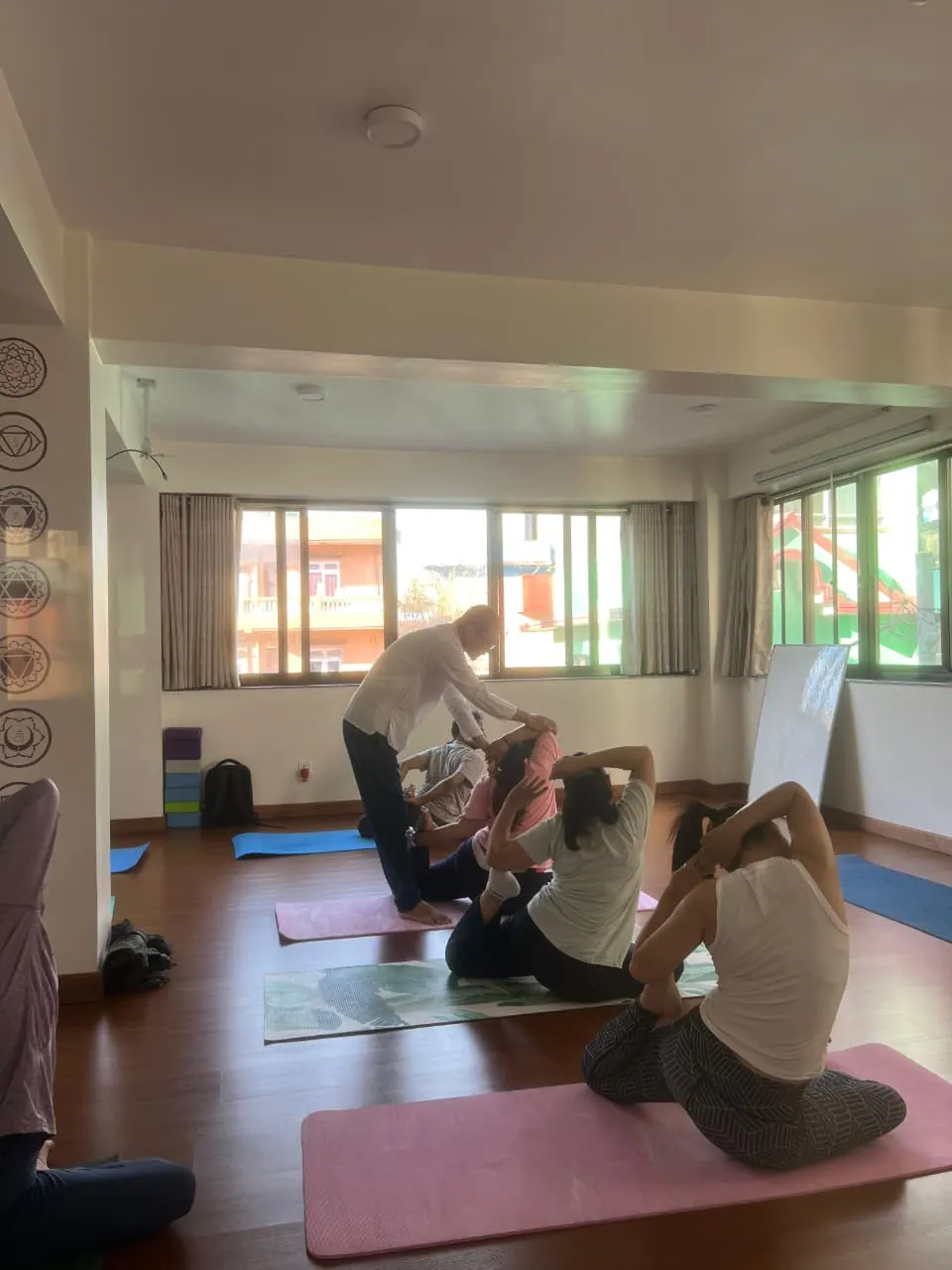
This is the point many brochures leave out: an unheated Kathmandu yoga studio can feel cold before sunrise. Accommodation can also feel chilly indoors, especially if you are used to central heating. Bring layers and ask about room heating, blankets, and hot-water arrangements before booking.
### What practice feels like
A warm, active morning practice can feel wonderful in winter once your body is moving. Yin yoga, meditation, and long periods of sitting may require socks, shawls, and extra layers until the room warms up.
Winter is often quieter than autumn, which suits people who prefer less tourist activity and a more reflective atmosphere.
### Air quality: an important reality
Kathmandu Valley can experience poorer air quality during the dry winter months. Temperature inversions, dust, traffic emissions, construction, and smoke can trap pollution in the valley, especially on still days.
Do not ignore this when planning a month in Kathmandu. If you have asthma, respiratory conditions, or a strong sensitivity to air pollution, speak with a health professional before travel and monitor local air-quality information while you are here. On poor-air days, you may choose indoor activities, avoid intense roadside exercise, and use a well-fitting mask outdoors if appropriate for you.
This does not mean winter is unsuitable for everyone. It means choosing it with open eyes.
### What to pack
- Warm layers for mornings and evenings.
- A fleece, jumper, or insulated jacket.
- Warm socks for meditation and early classes.
- A scarf or shawl.
- Lip balm and moisturiser for dry air.
- A mask if you want one for dusty or poor-air-quality days.
---
Practical notes for every month
### Visa and arrival
Many visitors can obtain a tourist visa on arrival in Nepal, but visa rules, eligibility, fees, required documents, and permitted stay lengths can change. Check the latest official immigration guidance and your nearest Nepalese embassy or consulate before you travel.
Bring passport photos and payment options only if current official guidance says they are needed. Do not rely on an old travel blog for entry rules.
### Altitude
Kathmandu sits at around 1,400 metres. For most healthy visitors, this is considered mild altitude and does not cause the acclimatisation issues associated with higher Himalayan trekking areas.
Still, travel fatigue, dehydration, alcohol, lack of sleep, and a busy first day can make anyone feel unwell. Drink water, rest after arrival, and give yourself a day or two to settle before expecting your strongest practice.
### What to bring regardless of season
- Comfortable yoga clothes you can wash easily.
- A reusable water bottle.
- Basic personal medicines and copies of prescriptions.
- Travel insurance details.
- A universal power adapter.
- Modest clothing for temples and local neighbourhoods.
- Curiosity, flexibility, and time to adjust.
So which month should you pick?
### If you are visiting Nepal for the first time
Choose October or November if possible. The weather is usually the most comfortable for living in Kathmandu, practising yoga, exploring the valley, and continuing your travels after training. Expect more visitors and book earlier.
### If you are budget-conscious
Consider June, July, or August if you do not mind rain and your focus is training rather than trekking. Monsoon is green, quieter, and often more affordable, but pack properly and be ready to adjust plans around wet weather.
### If you dislike heat
Choose late November, December, January, or February. You will avoid the warmer spring and monsoon humidity, but be prepared for cold mornings, chilly indoor spaces, and the possibility of poorer air quality in the valley during the driest months.
Whatever month you choose, Yogmandu can help you plan a more grounded stay in Kathmandu. Explore residential training, view Yogmandu's retreats, or contact us with questions about dates, accommodation, and what daily life in Kathmandu is like.